
Should Social Media Label Heavily Edited Photos?
Learn topic-related expressions and join the speaking club to practice them!
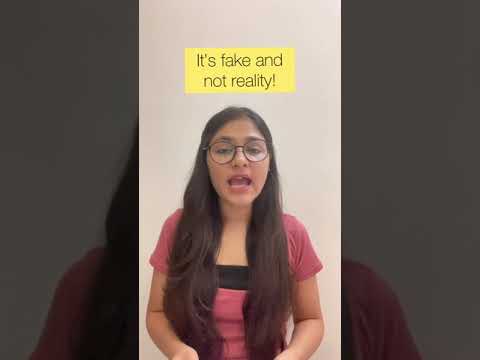


"Hello, everyone! I’m Arunima, and I’m currently pursuing a PhD in Computer Science in the US. I enjoy connecting with people, exploring thought-provoking topics, and helping others lead meaningful lives. I’m delighted to be part of the team and to support members of the community on their English-learning journeys!

Topic guide Optional
A quick way to understand the topic and find useful language. Read as much or as little as you like.
1-minute overview
Most images online are edited in some way. A creator may brighten a photo, remove a temporary blemish, use a beauty filter, reshape a body, or generate details with AI. Yet viewers often cannot tell where ordinary enhancement ends and a misleading transformation begins. Labels could make that hidden process more visible, especially when images promote beauty products, fitness plans, or cosmetic procedures.
Supporters argue that transparency may reduce unrealistic comparison and help people, particularly teenagers, judge images more critically. Research and health guidance have linked image-focused social media and appearance pressures with body-image concerns, although people’s experiences and vulnerabilities differ. Critics reply that a simple label may be ignored, difficult to enforce, or unfair to artists whose work is deliberately stylized.
The central challenge is designing a rule that protects audiences without treating every polished image as deception. The discussion also raises practical questions: Should creators disclose edits themselves? Should platforms detect them? And should paid advertising face a higher standard than personal posts?
Supporters argue that transparency may reduce unrealistic comparison and help people, particularly teenagers, judge images more critically. Research and health guidance have linked image-focused social media and appearance pressures with body-image concerns, although people’s experiences and vulnerabilities differ. Critics reply that a simple label may be ignored, difficult to enforce, or unfair to artists whose work is deliberately stylized.
The central challenge is designing a rule that protects audiences without treating every polished image as deception. The discussion also raises practical questions: Should creators disclose edits themselves? Should platforms detect them? And should paid advertising face a higher standard than personal posts?
Useful vocabulary
Approx. CEFR · Topic relevance
retouching
digital editing that improves or changes a person’s appearance in an image
Skin retouching may look harmless, but it can still create an unrealistic standard.
disclosure
a clear statement that reveals relevant information to an audience
A disclosure could tell viewers that a model’s body shape was digitally changed.
beauty filter
a camera or app effect that alters facial features, skin, or makeup
A beauty filter can make an edited face appear natural at first glance.
digital literacy
the ability to understand and evaluate digital content and technology critically
Labels may work best when users also have strong digital literacy.
commercial content
media created to sell, promote, or advertise a product or service
Commercial content aimed at teenagers may deserve stricter editing rules.
artistic license
freedom to change reality for creative purposes
Photographers may argue that labels restrict their artistic license.
Useful expressions
The key distinction may be between enhancement and transformation.
Use this to define a boundary between small edits and major changes.
The key distinction may be between enhancement and transformation, rather than between edited and unedited images.
That argument assumes that viewers will notice and understand the label.
Use this to identify an assumption behind a proposal.
That argument assumes that viewers will notice and understand the label before comparing themselves with the image.
The effect is likely to depend on context.
Use this to avoid overly general claims.
The effect is likely to depend on context: a fashion advertisement is not the same as a friend’s holiday photo.
A higher standard seems justified when money or power is involved.
Use this to argue for stronger responsibility in commercial situations.
A higher standard seems justified when money or power is involved, especially for influencers promoting appearance-related products.
We should be careful not to confuse transparency with censorship.
Use this to challenge the idea that labeling automatically limits expression.
We should be careful not to confuse transparency with censorship, because a label does not necessarily ban creative editing.
Question list
- Ice breaking
- Main topic
- Free talk
| Q1. | What kind of photo do you take most often? |
|---|---|
| Q2. | Do you enjoy being photographed? |
| Q3. | Which picture brings back a strong memory? |
| Q4. | How do you decide what to post online? |
| Q5. | What color do you wear when you want confidence? |
| Q6. | Have you ever deleted a social media account? |
| Q7. | Which camera effect do you find fun? |
| Q8. | What makes an image feel honest? |
| Q1. | How easy is it to recognize a heavily edited photo? |
|---|---|
| Q2. | Would labels reduce unhealthy comparisons online? |
| Q3. | What should count as heavy editing? |
| Q4. | Who should be responsible for adding and checking labels? |
| Q5. | Should rules be stricter for influencers and advertisers? |
| Q6. | How might edited images affect teenagers differently from adults? |
| Q7. | Could labeling limit creativity or artistic expression? |
| Q8. | Would a label change the way you react to a photo? |
| Q1. | Why do people edit ordinary moments before sharing them? |
|---|---|
| Q2. | Should beauty filters be disabled automatically for younger users? |
| Q3. | How can viewers build healthier habits around visual content? |
| Q4. | Would unedited celebrity photos change public expectations? |
| Q5. | Where is the line between correction and deception? |
| Q6. | Can an artificial image still express something authentic? |
| Q7. | How should schools teach visual media literacy? |
| Q8. | What would make social platforms feel less appearance-focused? |
Rules


Please be kind and respectful.
Note: You can be banned for violating any of these rules
No flirting! Don't ask for other people's social network, number etc. if he/she refuses to give them.
Note: You can be banned for violating any of these rules
Give others an equal opportunity to speak.
Note: You can be banned for violating any of these rules
Avoid Smoking / Drinking while you are talking.
Note: You can be banned for violating any of these rules
Turning your camera on is mandatory.
Note: You can be banned for violating any of these rules
Ready to join the conversation?
Book your spot and bring your perspective to the discussion.