
Should Street Art Be Protected as Part of a City's Culture?
Learn topic-related expressions and join the speaking club to practice them!


Marhaban everyone! my name is Bilel and I'm from Tunisia . I have a bachelor's degree in English (International Relations). I have worked as a translator, International Business Developer and a director in a teaching center. After COVID, I started my carrier as a part-time English teacher in Tunis, the capital city of Tunisia. I'm an ambitious person, and never give up my dream of working for the Ministry of Foreign Affairs of Tunisia, and why not be an ambassador someday!?
I'm thrilled to see you all in the Langclub sessions.

Topic guide Optional
A quick way to understand the topic and find useful language. Read as much or as little as you like.
1-minute overview
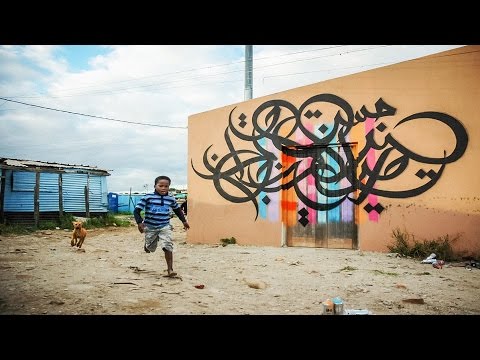
Street art includes murals, stencils, posters, stickers and graffiti made for the street rather than a gallery. Its supporters see it as a direct, accessible form of urban expression: it can record local histories, make overlooked spaces more visible, and give political or marginalized voices a public platform. Cities and museums increasingly recognize that graffiti and street art have influenced contemporary culture, even though the boundary between them is often disputed.
The difficult issue is not simply whether an image looks attractive. A work may be unauthorized, placed on someone else’s property, or costly to remove; it may also become meaningful to residents and visitors over time. Protecting it can respect collective memory, but can also reward rule-breaking, commercialize a once-independent culture, or freeze a changing street scene. Decisions therefore raise questions about ownership, consent, artistic merit, community attachment, and who has the power to define a city’s cultural heritage. There is rarely a neutral answer.
The difficult issue is not simply whether an image looks attractive. A work may be unauthorized, placed on someone else’s property, or costly to remove; it may also become meaningful to residents and visitors over time. Protecting it can respect collective memory, but can also reward rule-breaking, commercialize a once-independent culture, or freeze a changing street scene. Decisions therefore raise questions about ownership, consent, artistic merit, community attachment, and who has the power to define a city’s cultural heritage. There is rarely a neutral answer.
Useful vocabulary
Approx. CEFR · Topic relevance
vandalism
Deliberate damage to public or private property.
Some people consider any unapproved painting on a wall to be vandalism.
public realm
Shared spaces that people can access or experience, such as streets and parks.
Street art can change how people feel about the public realm.
unauthorized
Done without official or owner permission.
An unauthorized mural may still be valued by the local community.
cultural heritage
Traditions, places, objects, or works considered important to a community’s identity.
The debate is whether a famous graffiti wall can become cultural heritage.
gentrification
The process in which an area becomes wealthier, often making it less affordable for existing residents.
Critics argue that fashionable street art can sometimes contribute to gentrification.
curate
To select and organize art or cultural material for public display or preservation.
A city should not be the only institution that curates its visual culture.
Useful expressions
The key distinction may lie in..., rather than...
Use this to identify the principle that separates two similar-looking cases.
The key distinction may lie in consent and context, rather than artistic skill.
That argument overlooks the fact that...
Use this to challenge a view while adding a missing consideration.
That argument overlooks the fact that property owners also bear the cost of removal.
It becomes more complicated when...
Use this to introduce an exception or difficult case.
It becomes more complicated when an illegal work later gains historical importance.
We should distinguish between the short-term impact and the long-term significance.
Use this to compare immediate effects with later cultural value.
We should distinguish between the short-term impact on a building and the long-term significance of the artwork.
The question is who has the legitimacy to decide.
Use this to focus attention on power, representation, and decision-making.
The question is who has the legitimacy to decide whether a mural represents the neighborhood.
Question list
- Ice breaking
- Main topic
- Free talk
| Q1. | What do you usually do before going to bed? |
|---|---|
| Q2. | What’s the most interesting thing about your hometown, and why is it special to you? |
| Q3. | If you could instantly learn any language, which one would it be? |
| Q4. | What keeps you up at night? |
| Q5. | Describe a conversation that left a lasting impression on you. |
| Q6. | What’s a way you’ve adapted to a major life transition? |
| Q7. | Do you like simple things or fancy/flashy ones? |
| Q8. | How do you show kindness on a difficult day? |
| Q1. | What separates street art from vandalism? |
|---|---|
| Q2. | Can street art make an unattractive area more interesting? |
| Q3. | Should artists need permission before painting in public spaces? |
| Q4. | Who should decide whether a piece of street art is worth preserving? |
| Q5. | Can graffiti become an important part of a city's identity? |
| Q6. | Should property owners always have the right to remove street art? |
| Q7. | Can street art communicate social ideas better than traditional art? |
| Q8. | When should something painted illegally be protected as art? |
| Q1. | How can shared creative projects strengthen relationships between people? |
|---|---|
| Q2. | Would you ever consider living permanently in a country other than your home country? Why or why not? |
| Q3. | Have you ever experienced unexpected kindness during travel? |
| Q4. | Do you think you can survive in modern society without your cell phone? |
| Q5. | Do you think competition brings out the best in people? Why or why not? |
| Q6. | What are your short-term and long-term goals? |
| Q7. | Is there something the world has turned a blind eye to that bothers you? |
| Q8. | How do you recharge your emotional energy? |
Rules


Please be kind and respectful.
Note: You can be banned for violating any of these rules
No flirting! Don't ask for other people's social network, number etc. if he/she refuses to give them.
Note: You can be banned for violating any of these rules
Give others an equal opportunity to speak.
Note: You can be banned for violating any of these rules
Avoid Smoking / Drinking while you are talking.
Note: You can be banned for violating any of these rules
Turning your camera on is mandatory.
Note: You can be banned for violating any of these rules
Ready to join the conversation?
Book your spot and bring your perspective to the discussion.