
Should Supermarkets Sell More Imperfect-Looking Fruit and Vegetables?
Learn topic-related expressions and join the speaking club to practice them!


Marhaban everyone! my name is Bilel and I'm from Tunisia . I have a bachelor's degree in English (International Relations). I have worked as a translator, International Business Developer and a director in a teaching center. After COVID, I started my carrier as a part-time English teacher in Tunis, the capital city of Tunisia. I'm an ambitious person, and never give up my dream of working for the Ministry of Foreign Affairs of Tunisia, and why not be an ambassador someday!?
I'm thrilled to see you all in the Langclub sessions.

Topic guide Optional
A quick way to understand the topic and find useful language. Read as much or as little as you like.
1-minute overview
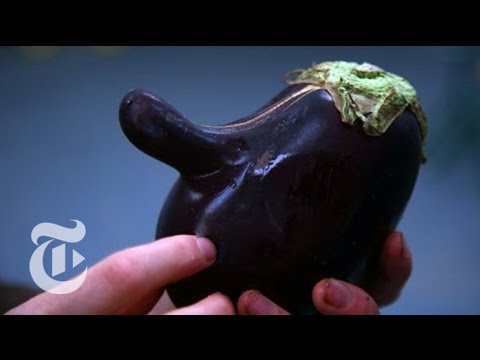
A curved cucumber, a small apple, or a carrot with extra “legs” may be perfectly edible, yet many supermarkets prefer produce that is uniform in size, color, and shape. Retailers argue that consistent appearance helps customers choose quickly, simplifies packing and pricing, and reduces the risk that shoppers mistake damage or spoilage for harmless variation. In the United States, many produce grade standards are voluntary, but commercial expectations can still strongly influence what reaches shelves.
Supporters of imperfect produce say cosmetic standards waste food, farming labor, water, and energy when edible crops are rejected or redirected to lower-value uses. They often favor discounts, clear information, and attractive displays to make unusual-looking items feel like a normal choice rather than a second-rate one. Critics note that looks can sometimes signal bruising, short shelf life, or other quality problems, so appearance should not be dismissed entirely. The key question is where to draw the line between sensible quality control and unnecessary perfection.
Supporters of imperfect produce say cosmetic standards waste food, farming labor, water, and energy when edible crops are rejected or redirected to lower-value uses. They often favor discounts, clear information, and attractive displays to make unusual-looking items feel like a normal choice rather than a second-rate one. Critics note that looks can sometimes signal bruising, short shelf life, or other quality problems, so appearance should not be dismissed entirely. The key question is where to draw the line between sensible quality control and unnecessary perfection.
Useful vocabulary
Approx. CEFR · Topic relevance
cosmetic standards
Rules about a product’s outward appearance rather than its safety or taste.
Cosmetic standards may exclude a crooked carrot even when it is fresh and nutritious.
edible
Safe and suitable to eat.
The banana looks spotted, but it is still edible.
blemish
A small mark or surface imperfection.
A few blemishes on an apple do not automatically affect its flavor.
shelf life
The period during which a food remains good enough to sell or eat.
A lower price may be fair if imperfect produce has a shorter shelf life.
grade standard
An agreed system for classifying products by qualities such as size, condition, or appearance.
A grade standard can make trade easier, but it can also encourage uniformity.
redirect
To send something to a different use, market, or destination.
Misshapen tomatoes can be redirected to a soup or sauce producer.
Useful expressions
The important distinction is between … and …
Use it to separate appearance from a more meaningful issue such as safety.
The important distinction is between superficial damage and evidence of spoilage.
That argument rests on the assumption that …
Use it to identify an idea that may need evidence.
That argument rests on the assumption that customers will avoid unusual-looking produce.
It may solve one problem while creating another.
Use it to weigh a policy’s trade-offs.
A large discount may solve a demand problem while creating the impression of inferior quality.
The benefits would depend largely on …
Use it to avoid making an overly broad claim.
The benefits would depend largely on how much edible produce is currently left unsold.
We should be careful not to equate … with …
Use it to challenge a misleading comparison.
We should be careful not to equate an irregular shape with poor nutrition.
Sources & further reading
Question list
- Ice breaking
- Main topic
- Free talk
| Q1. | How do you bring more spontaneity into your life? |
|---|---|
| Q2. | Have you ever been surprised by your own resilience during hard times? |
| Q3. | What’s a space that instantly makes you feel safe and at ease? |
| Q4. | What’s a lesson you’ve learned about resilience from your own experiences? |
| Q5. | What is your favorite way to capture travel memories? |
| Q6. | If you had one day to express gratitude fully, whom would you thank? |
| Q7. | What is a song that always lifts your spirits? |
| Q8. | What’s a simple pleasure you truly cherish? |
| Q1. | Would you buy fruit or vegetables that looked unusual? |
|---|---|
| Q2. | Why do supermarkets reject imperfect-looking produce? |
| Q3. | Should imperfect food be sold at a lower price? |
| Q4. | Does appearance affect how people judge food quality? |
| Q5. | Could selling more imperfect produce significantly reduce waste? |
| Q6. | Should supermarkets educate customers about natural variation? |
| Q7. | Would special labels help or make the food seem inferior? |
| Q8. | What other food-quality standards create unnecessary waste? |
| Q1. | How do you bring out the best in people during conversations? |
|---|---|
| Q2. | What type of opportunities scare you in a good way? |
| Q3. | Some people swear by meditation or mindfulness. What practices help you stay grounded? |
| Q4. | Do you hide things from people if you think they will react badly? |
| Q5. | What moment recently brought unexpected insight? |
| Q6. | What will never cease to make you smile? |
| Q7. | What are your thoughts on the current state of the justice system? |
| Q8. | What regulations should be in place for developing genetically modified foods? |
Rules


Please be kind and respectful.
Note: You can be banned for violating any of these rules
No flirting! Don't ask for other people's social network, number etc. if he/she refuses to give them.
Note: You can be banned for violating any of these rules
Give others an equal opportunity to speak.
Note: You can be banned for violating any of these rules
Avoid Smoking / Drinking while you are talking.
Note: You can be banned for violating any of these rules
Turning your camera on is mandatory.
Note: You can be banned for violating any of these rules
Ready to join the conversation?
Book your spot and bring your perspective to the discussion.