
Should Tourist Attractions Charge Visitors More Than Local Residents?
Learn topic-related expressions and join the speaking club to practice them!


"Hello, everyone! I’m Arunima, and I’m currently pursuing a PhD in Computer Science in the US. I enjoy connecting with people, exploring thought-provoking topics, and helping others lead meaningful lives. I’m delighted to be part of the team and to support members of the community on their English-learning journeys!

Topic guide Optional
A quick way to understand the topic and find useful language. Read as much or as little as you like.
1-minute overview
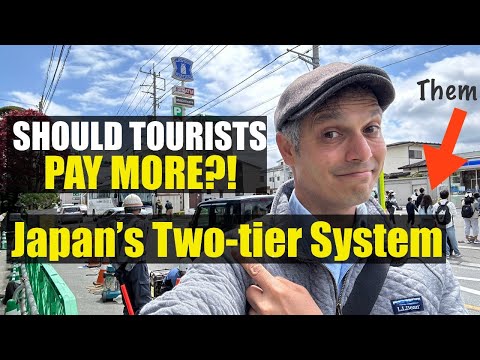
Charging visitors more than local residents, often called resident pricing or dual pricing, is used at some museums, parks, and heritage sites. Supporters argue that it recognizes two realities: local taxpayers may already help fund public attractions, and residents live with tourism’s less visible costs, including crowding, noise, pressure on services, and wear on shared spaces. Lower prices may also help local families use cultural institutions more regularly.
Critics respond that a person’s address is not always a good measure of need or responsibility. A visitor may be on a limited budget, while a wealthy nearby resident receives a discount. Different prices can also feel unfriendly, be difficult to enforce, or discourage valuable tourism spending. The central question is not simply whether tourists should pay more, but what the extra revenue is for, how clearly the policy is explained, and whether the benefits return to the community. Fair systems may combine modest resident discounts with transparent funding, off-peak offers, or free access for people with low incomes.
Critics respond that a person’s address is not always a good measure of need or responsibility. A visitor may be on a limited budget, while a wealthy nearby resident receives a discount. Different prices can also feel unfriendly, be difficult to enforce, or discourage valuable tourism spending. The central question is not simply whether tourists should pay more, but what the extra revenue is for, how clearly the policy is explained, and whether the benefits return to the community. Fair systems may combine modest resident discounts with transparent funding, off-peak offers, or free access for people with low incomes.
Useful vocabulary
Approx. CEFR · Topic relevance
dual pricing
A system in which different groups pay different prices for the same service.
Dual pricing seems reasonable if local taxes support the attraction.
resident rate
A reduced price available to people who live in a particular area.
The resident rate could encourage families to visit throughout the year.
cross-subsidize
/ˌkrɔs ˈsʌbsədaɪz/To use money from one group or activity to help cover another’s costs.
Higher tourist fees could cross-subsidize free school visits.
carrying capacity
The number of visitors a place can handle without serious harm or overcrowding.
Ticket prices should reflect the site’s carrying capacity during peak season.
administrative burden
The time, work, and cost needed to manage a system.
Checking every visitor’s address may create an unnecessary administrative burden.
price elasticity
The degree to which demand changes when a price rises or falls.
The attraction should study price elasticity before increasing tourist tickets.
Useful expressions
The fairness of this policy depends partly on...
Use this to introduce a condition that affects whether a policy is fair.
The fairness of this policy depends partly on how the extra money is spent.
A key distinction is between...
Use this to separate two ideas that are often treated as identical.
A key distinction is between rewarding residents and penalizing visitors.
That argument assumes that...
Use this to identify an unstated belief behind a claim.
That argument assumes that tourists can easily afford higher prices.
Even if that is true, it does not necessarily follow that...
Use this to challenge a conclusion without rejecting every part of an argument.
Even if tourism creates costs, it does not necessarily follow that every visitor should pay more.
We should weigh the benefits against the possible drawbacks.
Use this to recommend a balanced evaluation.
We should weigh the benefits of local access against the possible drawbacks for tourism.
Question list
- Ice breaking
- Main topic
- Free talk
| Q1. | If you could only visit one continent for the rest of your life, which would it be? |
|---|---|
| Q2. | How do you stay patient during long-term goals? |
| Q3. | If you could speak any language fluently, which would it be? |
| Q4. | Ever had a random encounter with a stranger that you still think about? |
| Q5. | How do you like to spend rainy days? |
| Q6. | Describe a time when your instincts guided you in the right direction. |
| Q7. | How important is individuality? |
| Q8. | If you could live in any country for a year, where would it be? |
| Q1. | Should local residents pay less for museums and attractions? |
|---|---|
| Q2. | Why might tourist attractions charge visitors more? |
| Q3. | How can lower local prices benefit the community? |
| Q4. | When does different pricing become unfair? |
| Q5. | Should tourists pay more if their visits create extra costs? |
| Q6. | How can attractions prove who is a local resident? |
| Q7. | Would higher prices reduce the number of visitors? |
| Q8. | What pricing system would feel fair to both groups? |
| Q1. | What is the relationship between mind and body? |
|---|---|
| Q2. | How do you think schools can better support students in developing a healthy work-life balance? |
| Q3. | Do you believe that "the end justifies the means"? |
| Q4. | What sound or atmosphere helps you focus deeply? |
| Q5. | What’s your favorite way to celebrate achievements? |
| Q6. | How has social media impacted relationships? |
| Q7. | Is kindness more powerful than intelligence in creating positive change? |
| Q8. | How do you think technology has changed the way we experience travel and engage with the world around us? |
Rules


Please be kind and respectful.
Note: You can be banned for violating any of these rules
No flirting! Don't ask for other people's social network, number etc. if he/she refuses to give them.
Note: You can be banned for violating any of these rules
Give others an equal opportunity to speak.
Note: You can be banned for violating any of these rules
Avoid Smoking / Drinking while you are talking.
Note: You can be banned for violating any of these rules
Turning your camera on is mandatory.
Note: You can be banned for violating any of these rules
Ready to join the conversation?
Book your spot and bring your perspective to the discussion.