
Should Traffic Fines Be Based on a Person's Income?
Learn topic-related expressions and join the speaking club to practice them!


Albert, an engineer and explorer.
Hello everyone! My name is Albert and I am super happy to meet each person here! I love communicating in English and therefore I try to practice it as much as I can. I am an engineer by my background, and I like to know how everything works, as well as I like travelling, music, all sorts of activities and adventures.

Topic guide Optional
A quick way to understand the topic and find useful language. Read as much or as little as you like.
1-minute overview
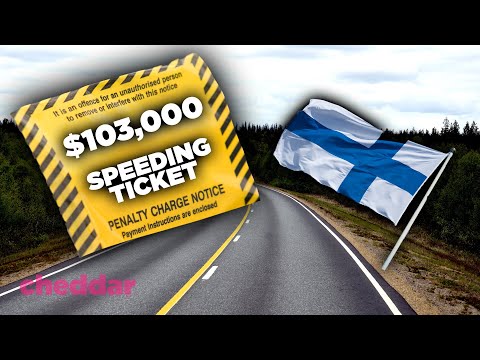
Traffic fines sit at the intersection of road safety, punishment, and economic inequality. A fixed penalty is simple, quick to administer, and easy for drivers to understand. Yet the same amount can be a minor inconvenience for one person and a serious financial shock for another. Supporters of income-based, or “day-fine,” systems argue that penalties should impose a comparable burden, not merely display the same number on a ticket. Versions of this approach already exist in parts of Europe and in some court-based sentencing systems.
The central disagreement is about what fairness requires. One view says equal treatment means identical fines for identical conduct; another says a meaningful deterrent must take ability to pay into account. Designing such a system also raises practical questions: which income measure counts, how assets and irregular earnings are treated, who can see financial data, and whether errors can be appealed. Higher fines may change behaviour, but evidence of deterrence depends on enforcement, the chance of being caught, and public trust as well as price. The debate therefore tests both moral principles and administrative capacity.
The central disagreement is about what fairness requires. One view says equal treatment means identical fines for identical conduct; another says a meaningful deterrent must take ability to pay into account. Designing such a system also raises practical questions: which income measure counts, how assets and irregular earnings are treated, who can see financial data, and whether errors can be appealed. Higher fines may change behaviour, but evidence of deterrence depends on enforcement, the chance of being caught, and public trust as well as price. The debate therefore tests both moral principles and administrative capacity.
Useful vocabulary
Approx. CEFR · Topic relevance
fixed penalty
A fine set at the same amount for everyone who commits a particular offence.
A fixed penalty may be efficient, but it does not affect every driver in the same way.
day-fine
A fine calculated from the offender’s daily income, usually combined with the seriousness of the offence.
A day-fine system separates the seriousness of speeding from the driver’s ability to pay.
deterrence
The prevention of harmful behaviour by making its consequences unattractive.
The key issue is whether larger fines create stronger deterrence.
proportionality
The principle that a penalty should be appropriate to the offence and its impact.
Income-based fines aim for proportionality in the burden of punishment.
disposable income
Money available to spend after taxes and essential payments.
Two people with the same salary may have very different disposable incomes.
means testing
Checking a person’s income and financial resources to decide what they should pay or receive.
Means testing could make fines fairer, but it may also create privacy concerns.
Useful expressions
The crucial distinction is between equal amounts and equal impact.
Use this to introduce the main fairness debate.
The crucial distinction is between equal amounts and equal impact: those are not necessarily the same thing.
That argument assumes that financial pain is the right measure of punishment.
Use this to identify an underlying assumption.
That argument assumes that financial pain is the right measure of punishment, rather than the inconvenience of losing money.
It may be fair in principle but difficult in practice.
Use this to balance a moral argument with administrative concerns.
An income-based system may be fair in principle but difficult in practice if incomes are hard to verify.
The policy should be judged by its behavioural effect, not only by its symbolism.
Use this to shift the discussion toward evidence and outcomes.
The policy should be judged by its behavioural effect, not only by its symbolism as a statement about inequality.
A better comparison might be the share of income, rather than the cash amount.
Use this to propose a different standard for comparing penalties.
A better comparison might be the share of income, rather than the cash amount printed on the fine.
Sources & further reading
Question list
- Ice breaking
- Main topic
- Free talk
| Q1. | What’s the hardest part of learning English? |
|---|---|
| Q2. | How do you stay open-minded in conversations about differing views? |
| Q3. | If you could know either when you die or how, which would you choose? |
| Q4. | Have you ever snuck out of the house? |
| Q5. | If you could set up a pop-up shop, what would you sell? |
| Q6. | What is your dream job? |
| Q7. | What is your favorite season for traveling? |
| Q8. | What habit do you think would make the biggest positive impact if everyone adopted it? |
| Q1. | What is a traffic fine supposed to achieve: punishment or deterrence? |
|---|---|
| Q2. | Does a fixed fine affect a rich driver and a poor driver equally? |
| Q3. | Is a fine that someone barely notices still a real penalty? |
| Q4. | Would income-based fines make roads safer, or just feel fairer? |
| Q5. | How would a government verify income without invading privacy? |
| Q6. | Should the same principle apply to other fines and penalties? |
| Q7. | Could wealthy drivers argue they are being punished twice? |
| Q8. | What would you set as the fine for speeding if you designed the system? |
| Q1. | Imagine your ideal day with no responsibilities—what would you do? |
|---|---|
| Q2. | How do you like to celebrate your achievements? |
| Q3. | What role does self-reflection play in your life? |
| Q4. | What is one thing you are passionate about? |
| Q5. | How can we learn to accept and embrace change in our lives? |
| Q6. | How do you maintain focus during long meetings? |
| Q7. | Why do some people enjoy puzzles, riddles, or brain games more than others? |
| Q8. | If your life philosophy were a billboard slogan, what would it say? |
Rules


Please be kind and respectful.
Note: You can be banned for violating any of these rules
No flirting! Don't ask for other people's social network, number etc. if he/she refuses to give them.
Note: You can be banned for violating any of these rules
Give others an equal opportunity to speak.
Note: You can be banned for violating any of these rules
Avoid Smoking / Drinking while you are talking.
Note: You can be banned for violating any of these rules
Turning your camera on is mandatory.
Note: You can be banned for violating any of these rules
Ready to join the conversation?
Book your spot and bring your perspective to the discussion.