
Should Ultra-Processed Foods Carry Warning Labels?
Learn topic-related expressions and join the speaking club to practice them!


"Hello, everyone! I’m Arunima, and I’m currently pursuing a PhD in Computer Science in the US. I enjoy connecting with people, exploring thought-provoking topics, and helping others lead meaningful lives. I’m delighted to be part of the team and to support members of the community on their English-learning journeys!

Topic guide Optional
A quick way to understand the topic and find useful language. Read as much or as little as you like.
1-minute overview
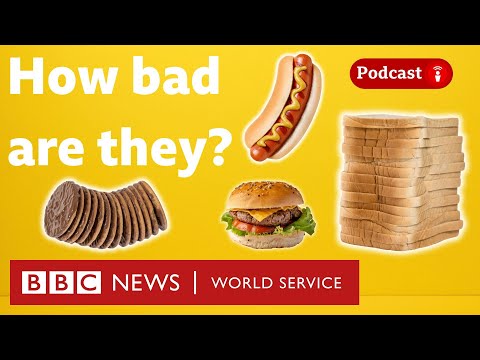
Ultra-processed foods, often called UPFs, are industrially formulated products that commonly combine refined ingredients with additives designed to improve flavour, texture, appearance, or shelf life. They include many familiar items, from soft drinks and packaged snacks to some breads, cereals, meat alternatives, and ready meals. The category is influential in public-health research, yet its boundaries can be difficult for shoppers to recognize and are still debated by scientists and regulators.
Warning labels could make an invisible feature of the food system easier to see at the moment of purchase. Supporters argue that clear front-of-pack information helps people make informed choices and encourages companies to improve products. Critics worry that a simple warning may treat very different foods alike, distract from sugar, salt, and nutrient content, or stigmatize affordable, convenient options. The central issue is not only whether labels work, but also what counts as fair guidance when time, income, cooking facilities, culture, and personal choice shape what people eat.
Warning labels could make an invisible feature of the food system easier to see at the moment of purchase. Supporters argue that clear front-of-pack information helps people make informed choices and encourages companies to improve products. Critics worry that a simple warning may treat very different foods alike, distract from sugar, salt, and nutrient content, or stigmatize affordable, convenient options. The central issue is not only whether labels work, but also what counts as fair guidance when time, income, cooking facilities, culture, and personal choice shape what people eat.
Useful vocabulary
Approx. CEFR · Topic relevance
ultra-processed food
An industrial food product made largely from refined substances and additives rather than whole foods.
I think an ultra-processed food label should explain why the product is in that category.
front-of-pack label
A short health or nutrition message shown on the front of a food package.
A front-of-pack label is more useful than information hidden in small print.
nutrient profile
The overall balance of nutrients in a food, such as fibre, sugar, salt, and fat.
A product’s nutrient profile may matter more than how it was manufactured.
reformulation
The process of changing a product’s ingredients or recipe.
Companies might respond to warnings through reformulation rather than smaller portions.
stigmatize
To make a person, group, or choice seem shameful or socially unacceptable.
Labels should inform consumers without stigmatizing people who rely on cheap ready meals.
trade-off
A situation in which gaining one benefit requires accepting a disadvantage.
Convenience and nutritional quality can involve a real trade-off for busy families.
Useful expressions
The strength of this argument depends on...
Use this to identify the evidence or condition an argument needs.
The strength of this argument depends on whether shoppers understand the warning.
That may be true in principle, but in practice...
Use this to distinguish an ideal policy from everyday reality.
That may be true in principle, but in practice many people shop under severe time pressure.
We should separate the question of... from the question of...
Use this to prevent two related issues from being confused.
We should separate the question of health risk from the question of personal responsibility.
Compared with the alternative, this approach...
Use this to evaluate a policy against another realistic option.
Compared with the alternative, this approach gives consumers faster information at the shelf.
The unintended consequence could be...
Use this to raise a possible side effect without rejecting an idea completely.
The unintended consequence could be that lower-income shoppers feel blamed rather than supported.
Question list
- Ice breaking
- Main topic
- Free talk
| Q1. | What is the most significant achievement of your life so far? |
|---|---|
| Q2. | How would you use your title to make a difference in your community? |
| Q3. | If you could have lunch with anyone in the world, who would you choose? |
| Q4. | What meaningful silence have you experienced recently? |
| Q5. | If you could live in any country for a year, where would it be? |
| Q6. | What new routine would you like to try? |
| Q7. | What’s a unique way you like to express your appreciation for others? |
| Q8. | What tiny change created big peace in your life? |
| Q1. | Do you read food labels before buying? |
|---|---|
| Q2. | Do you know which foods count as ultra-processed? |
| Q3. | Do warning labels change what people actually buy? |
| Q4. | Is this useful information or unnecessary fear? |
| Q5. | Should convenience and price be part of the judgement? |
| Q6. | Who should decide what earns a warning: governments or scientists? |
| Q7. | Would labels hurt people with the least time and money most? |
| Q8. | What would your label say, and where would you put it? |
| Q1. | Personal rituals often provide comfort. Do you have a specific routine that helps you start your day right? |
|---|---|
| Q2. | If you could donate a million dollars to one cause, which would it be? |
| Q3. | What are your thoughts on global warming and how can you help combat it? |
| Q4. | How do you think the rise of citizen journalism has affected traditional news reporting and the role of journalists? |
| Q5. | How do you deal with situation when you don't agree with another person? |
| Q6. | How do you decide which goals to pursue first? |
| Q7. | How do you evaluate whether a goal fits your long-term vision? |
| Q8. | What are your thoughts on the responsibility of social media platforms in combating misinformation and promoting accurate information? |
Rules


Please be kind and respectful.
Note: You can be banned for violating any of these rules
No flirting! Don't ask for other people's social network, number etc. if he/she refuses to give them.
Note: You can be banned for violating any of these rules
Give others an equal opportunity to speak.
Note: You can be banned for violating any of these rules
Avoid Smoking / Drinking while you are talking.
Note: You can be banned for violating any of these rules
Turning your camera on is mandatory.
Note: You can be banned for violating any of these rules
Ready to join the conversation?
Book your spot and bring your perspective to the discussion.