Should Universities Offer Refunds to Graduates Who Cannot Find a Job?
Learn topic-related expressions and join the speaking club to practice them!

Hi there! I'm Jonah from Langclub. I'm interested in new technologies to help people learn languages and connecting people.

Topic guide Optional
A quick way to understand the topic and find useful language. Read as much or as little as you like.
1-minute overview
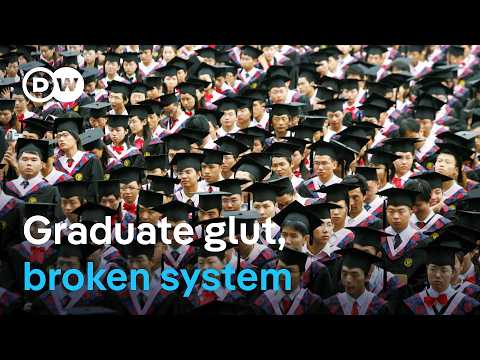
The idea of refunding graduates who cannot find work treats a degree like a product with a guarantee. Supporters argue that students, often in debt, pay large sums for a promise of better prospects, and that universities should share some of the risk. Recent data gives the debate urgency. New York Federal Reserve figures cited this year put US unemployment for recent graduates at 5.7% in June, above the 4.1% rate for all workers. The traditional graduate advantage over non-graduates has also narrowed.
Critics reply that universities do not control labour markets, and that education has aims beyond employment, including knowledge, civic understanding and personal growth. Refund rules could be hard to design. They would need to define how long a search must last, what counts as a suitable job, and how much effort a graduate must show. They might also push institutions to drop arts and humanities courses or to admit only students who are likely to succeed.
The discussion also asks who else is responsible: employers, governments, and students themselves.
Useful vocabulary
Approx. CEFR · Topic relevance
employability
The skills and qualities that make someone likely to be hired.
Some universities now measure their success partly by the employability of their graduates.
tuition
/tuˈɪʃən/The fee paid for teaching at a school or university.
Many students accept high tuition because they expect a better salary later.
accountability
The obligation to explain and take responsibility for results.
Refund schemes would increase universities' accountability for the outcomes they promise.
moral hazard
A situation where protection from risk encourages people to behave less carefully.
A refund could create a moral hazard if graduates stopped searching seriously for work.
underemployment
Working in a job that needs less skill or fewer hours than a person can offer.
A graduate stacking shelves is not unemployed, but this is still underemployment.
intrinsic value
Worth that something has in itself, apart from any practical or financial benefit.
Defenders of philosophy degrees often stress their intrinsic value, not just their salary outcomes.
Useful expressions
That hinges on whether
Showing that a conclusion depends on one key condition.
Whether refunds are fair hinges on whether universities can really influence hiring.
To be fair to
Acknowledging a party's position before criticising or qualifying an argument.
To be fair to universities, they cannot control the economy.
It's a double-edged sword
Saying that an idea has both benefits and serious drawbacks.
Job guarantees are a double-edged sword because they reassure students but may narrow course choices.
That overlooks the fact that
Challenging an argument by pointing out a missing factor.
That overlooks the fact that some graduates choose low-paying but meaningful careers.
By the same logic
Extending a principle to another case to test whether it holds.
By the same logic, should hospitals refund patients who are not cured?
Question list
- Ice breaking
- Main topic
- Free talk
| Q1. | How do you create connections through small gestures? |
|---|---|
| Q2. | How do you regain balance after a chaotic week? |
| Q3. | What challenge would you create for yourself this month? |
| Q4. | What fictional object would be useful in real life? |
| Q5. | Do you have a favorite quote or saying? |
| Q6. | If you could be famous for something, what would it be? |
| Q7. | How do you approach building deeper connections with others? |
| Q8. | How can schools better incorporate experiential learning opportunities into their curricula? |
| Q1. | What did you expect a university education to help you achieve? |
|---|---|
| Q2. | Should finding a job be the main measure of a degree's value? |
| Q3. | How long should graduates search for work before requesting a refund? |
| Q4. | Would refund rules need to consider the graduate's chosen subject? |
| Q5. | What responsibilities should students have before qualifying for a refund? |
| Q6. | Could job guarantees discourage universities from offering arts degrees? |
| Q7. | Should employers share responsibility for helping graduates enter work? |
| Q8. | What support would you prefer to a tuition refund? |
| Q1. | What role do you think extracurricular activities play in helping students develop important life skills and values? |
|---|---|
| Q2. | How does the current generation of children differ from what children were like when you were younger? |
| Q3. | What societal forces are behind the 'gig economy' boom? |
| Q4. | Do you believe people are naturally good or bad? |
| Q5. | What is one thing you have learned in the past year that has changed your perspective on life? |
| Q6. | If we experience our greatest moments of growth and learning from failure, why are we so afraid to fail? |
| Q7. | What makes dialogues more engaging to you? |
| Q8. | How do you understand people's motivations? |
Rules


Please be kind and respectful.
Note: You can be banned for violating any of these rules
No flirting! Don't ask for other people's social network, number etc. if he/she refuses to give them.
Note: You can be banned for violating any of these rules
Give others an equal opportunity to speak.
Note: You can be banned for violating any of these rules
Avoid Smoking / Drinking while you are talking.
Note: You can be banned for violating any of these rules
Turning your camera on is mandatory.
Note: You can be banned for violating any of these rules
Ready to join the conversation?
Book your spot and bring your perspective to the discussion.