
Should Vaccine Patents Be Suspended During Global Health Emergencies?
Learn topic-related expressions and join the speaking club to practice them!

I’m Ken, a Kenyan accountant with a special love for languages. I enjoy cross-cultural conversations and love hearing different accents from around the world come together through one shared language. I especially enjoy easy, judgment-free conversations where there is no pressure for perfection—just people connecting over random topics.

Topic guide Optional
A quick way to understand the topic and find useful language. Read as much or as little as you like.
1-minute overview
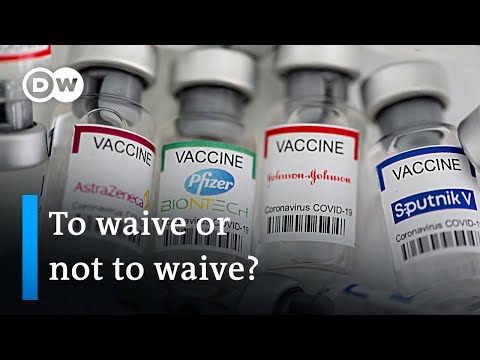
Vaccine patents give their holders the legal power to control who can make, use, or sell an invention for a limited period. Supporters say this protection helps companies recover the high costs and risks of research, clinical trials, and failed projects. Critics argue that, in a pandemic, exclusive control can deepen global inequality when public funding, urgent need, and limited supply are all involved.
The COVID-19 crisis made the dispute practical rather than theoretical. In June 2022, WTO members adopted a limited decision intended to make some compulsory-licensing options for COVID-19 vaccines easier. Yet patents are only one part of vaccine production: manufacturers also need skilled staff, quality systems, regulatory approval, reliable ingredients, and often confidential know-how. WHO-backed mRNA technology-transfer efforts therefore focus on training and production capacity as well as intellectual property. The central tension is not simply patents versus patients. It is how to reward innovation while ensuring that lifesaving technology can reach people quickly, affordably, and fairly during exceptional emergencies.
The COVID-19 crisis made the dispute practical rather than theoretical. In June 2022, WTO members adopted a limited decision intended to make some compulsory-licensing options for COVID-19 vaccines easier. Yet patents are only one part of vaccine production: manufacturers also need skilled staff, quality systems, regulatory approval, reliable ingredients, and often confidential know-how. WHO-backed mRNA technology-transfer efforts therefore focus on training and production capacity as well as intellectual property. The central tension is not simply patents versus patients. It is how to reward innovation while ensuring that lifesaving technology can reach people quickly, affordably, and fairly during exceptional emergencies.
Useful vocabulary
Approx. CEFR · Topic relevance
patent
A legal right that gives an inventor temporary control over an invention.
A patent can encourage investment, but it may also limit who can manufacture a vaccine.
compulsory licence
Government permission to use a patented invention without the owner’s agreement, usually with payment.
A compulsory licence could allow local production during a severe health emergency.
technology transfer
The sharing of technical knowledge, skills, and processes needed to make a product.
Technology transfer may be more useful than a patent waiver alone.
know-how
Practical, often unpublished expertise required to perform a complex task successfully.
A factory may have access to a patent but still lack the know-how to produce safe vaccines.
manufacturing capacity
The staff, equipment, facilities, and systems available to produce something at scale.
Building manufacturing capacity can improve a region’s preparedness for future outbreaks.
public health emergency
A serious health threat that requires urgent action beyond normal systems.
Some people believe that normal business rules should change during a public health emergency.
Useful expressions
The key distinction is between legal access and practical ability.
Use this to separate permission to use a technology from the ability to produce it safely.
The key distinction is between legal access and practical ability: removing a barrier does not create a factory overnight.
That argument depends on what we mean by innovation.
Use this to question whether innovation means invention, affordable access, or long-term capacity.
That argument depends on what we mean by innovation: is it only developing a vaccine, or also making it widely available?
The benefits may be immediate, whereas the costs could be longer term.
Use this to compare urgent public-health gains with possible effects on future investment.
The benefits may be immediate, whereas the costs could be longer term if firms expect weaker returns.
It would be misleading to treat this as a single-cause problem.
Use this to challenge an overly simple explanation.
It would be misleading to treat this as a single-cause problem, because supply chains and regulation matter too.
A fair solution might combine temporary exceptions with clear safeguards.
Use this to propose a balanced compromise.
A fair solution might combine temporary exceptions with clear safeguards for quality, payment, and future research.
Question list
- Ice breaking
- Main topic
- Free talk
| Q1. | How do you stay disciplined and committed to your goals, even when faced with distractions or challenges? |
|---|---|
| Q2. | Describe a dream you had that still lingers in your thoughts. |
| Q3. | What's the social issue you're most passionate about? |
| Q4. | Where do you see yourself thriving? |
| Q5. | How do you think you could make sure to be on time? |
| Q6. | What is the most innovative business model you have seen recently? |
| Q7. | What’s your most memorable childhood adventure? |
| Q8. | What’s an object in your home that represents a specific chapter of your life? |
| Q1. | Should lifesaving medical knowledge ever belong exclusively to one company? |
|---|---|
| Q2. | Could sharing vaccine technology help poorer countries during a crisis? |
| Q3. | Do pharmaceutical companies need patents to justify expensive research? |
| Q4. | Should normal business rules change during a global emergency? |
| Q5. | Would removing patents necessarily make vaccines easier to produce? |
| Q6. | Should wealthy countries have greater responsibility to share medical technology? |
| Q7. | Could weaker patent protection reduce future innovation? |
| Q8. | How should the world balance public health and companies' rights? |
| Q1. | Are there enough holidays in your country for which workers get the day or days off? |
|---|---|
| Q2. | Do you think money can buy happiness? Why or why not? |
| Q3. | How do you stay accountable to your goals without external pressure? |
| Q4. | How do you think we can address the issue of cyberbullying? |
| Q5. | Why does courage often appear only after we take action? |
| Q6. | Are some lives more valuable than others? |
| Q7. | What’s the best age to allow driving a car? |
| Q8. | What inspires your sense of curiosity? |
Rules


Please be kind and respectful.
Note: You can be banned for violating any of these rules
No flirting! Don't ask for other people's social network, number etc. if he/she refuses to give them.
Note: You can be banned for violating any of these rules
Give others an equal opportunity to speak.
Note: You can be banned for violating any of these rules
Avoid Smoking / Drinking while you are talking.
Note: You can be banned for violating any of these rules
Turning your camera on is mandatory.
Note: You can be banned for violating any of these rules
Ready to join the conversation?
Book your spot and bring your perspective to the discussion.