Should We Repair Old Things Even When Replacing Them Is Cheaper?
Learn topic-related expressions and join the speaking club to practice them!

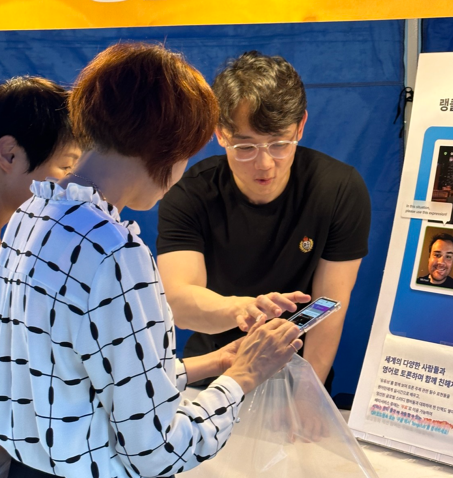

Hi there! I'm Jonah from Langclub. I'm interested in new technologies to help people learn languages and connecting people.

Topic guide Optional
A quick way to understand the topic and find useful language. Read as much or as little as you like.
1-minute overview
Repair is often slower and sometimes costlier than replacement. A cheap toaster, a phone with a sealed battery, or a washing machine waiting on an obscure part can make buying new look like the rational choice. Yet discarding things has costs that rarely appear on the receipt, including mined materials, manufacturing emissions and growing piles of electronic waste.
Policy is beginning to respond. The EU's right to repair directive, adopted in 2024, nudges sellers and manufacturers toward repair. It adds twelve months to a warranty when a consumer chooses repair, and it plans an online portal for finding repair shops. Member states had to write it into national law by mid-2026, so the real-world effect still varies by country.
The tensions are genuine: thrift against convenience, sentimental value against efficiency, and personal responsibility against product design. Newer models may even use less energy, which complicates the case. Repair can build skills and community, but not everyone has the time, tools or a nearby workshop.
Useful vocabulary
Approx. CEFR · Topic relevance
planned obsolescence
A deliberate design or business strategy that makes products wear out or become outdated sooner, so people buy replacements.
Some critics see sealed batteries as planned obsolescence, while manufacturers say they allow slimmer, more water-resistant devices.
right to repair
The idea, now partly written into law, that owners should be able to get their products fixed, with access to parts, tools and information.
A right to repair means little if the spare part costs almost as much as a new device.
spare parts
Individual components kept or sold so that a damaged product can be fixed instead of thrown away.
I would repair more often if manufacturers sold spare parts at fair prices for at least ten years.
throwaway culture
A social habit of treating goods as cheap and disposable, using them briefly and discarding them.
Fast fashion and cheap electronics have fed a throwaway culture that rewards convenience over care.
durability
/ˌdʊrəˈbɪləti/The ability of a product to last a long time and withstand wear without breaking.
Shoppers rarely compare durability, so it is hard for well-made products to justify a higher price.
sentimental value
The personal importance of an object because of memories or relationships, regardless of its market price.
My grandfather's watch has little resale worth, but its sentimental value makes any repair bill acceptable.
Useful expressions
That depends on how you define
Use it to challenge a claim by showing that its key term is open to interpretation.
That depends on how you define cheaper: the repair costs less today, but a new model might last longer.
It comes down to a trade-off between
Use it to frame a debate as a balance of competing priorities rather than a clear right or wrong.
It comes down to a trade-off between saving money now and reducing waste over time.
Hidden costs aside
Use it to set aside less visible factors temporarily so you can examine the obvious argument first.
Hidden costs aside, replacing a kettle is simply more convenient than hunting for a repairer.
That holds true only if
Use it to qualify a general statement by naming the condition under which it works.
That holds true only if repair shops are close enough and parts are actually available.
By the same logic
Use it to test an argument by applying its reasoning to another case, often exposing inconsistency.
By the same logic, we would have to repair a ten-euro item that costs fifty to fix.
Question list
- Ice breaking
- Main topic
- Free talk
| Q1. | What was your favorite subject in school, and why? |
|---|---|
| Q2. | What’s something you’ve always wanted to learn but haven’t started yet? |
| Q3. | If you received one message from your future self, what tone would you expect? |
| Q4. | If you could organize your life around one passion, what passion would you choose? |
| Q5. | Where do you go when you want to appreciate small things? |
| Q6. | What is your favorite memory from a family gathering? |
| Q7. | Where do you keep mementos that shaped you? |
| Q8. | How do you like to spend rainy days? |
| Q1. | What is something you have repaired instead of replacing? |
|---|---|
| Q2. | Which possessions would you repair even at a higher cost? |
| Q3. | Why do some people prefer buying new things? |
| Q4. | Would you learn a repair skill to save a favorite item? |
| Q5. | Should manufacturers make spare parts easier to buy? |
| Q6. | How do you decide when an object is no longer worth fixing? |
| Q7. | Could local repair workshops bring neighbors together? |
| Q8. | What would help you choose repair more often? |
| Q1. | What makes you invest effort in personal growth? |
|---|---|
| Q2. | How do you think we can promote greater gender equality in the workplace? |
| Q3. | Picture your ideal community. What values or features make it unique? |
| Q4. | How can governments support aging populations with accessible services? |
| Q5. | What is your favorite way to stay informed about news and current events? |
| Q6. | What’s a challenge you’re currently facing that you’re determined to overcome? |
| Q7. | What advice would you give your younger self? |
| Q8. | Do you prefer socializing in small groups or large gatherings? |
Rules


Please be kind and respectful.
Note: You can be banned for violating any of these rules
No flirting! Don't ask for other people's social network, number etc. if he/she refuses to give them.
Note: You can be banned for violating any of these rules
Give others an equal opportunity to speak.
Note: You can be banned for violating any of these rules
Avoid Smoking / Drinking while you are talking.
Note: You can be banned for violating any of these rules
Turning your camera on is mandatory.
Note: You can be banned for violating any of these rules
Ready to join the conversation?
Book your spot and bring your perspective to the discussion.