The Myth of the Lone Genius
Learn topic-related expressions and join the speaking club to practice them!

Hi there! I'm Jonah from Langclub. I'm interested in new technologies to help people learn languages and connecting people.

Topic guide Optional
A quick way to understand the topic and find useful language. Read as much or as little as you like.
1-minute overview
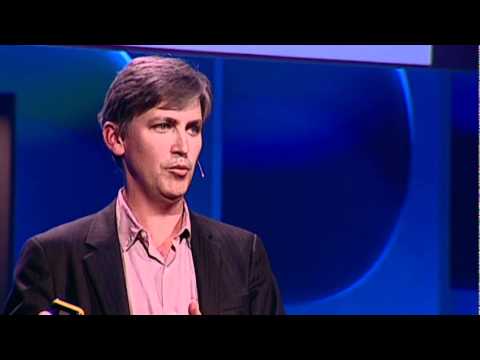
Popular history loves a solitary breakthrough: Archimedes in his bath, Newton under the apple tree. In his 2010 TED talk, Steven Johnson argues that good ideas usually grow out of "liquid networks", such as the coffeehouses of Enlightenment England, and out of the "slow hunch", the way Darwin's theory took shape over many years rather than in a single flash.
GPS has a similar back story. In 1957, physicists William Guier and George Weiffenbach at Johns Hopkins worked out Sputnik's orbit from the Doppler shift in its radio signal. Their boss asked them to reverse the problem and locate a receiver on the ground, which led to the Transit navigation system, a forerunner of GPS. Simultaneous discovery points the same way: in 1922, William Ogburn and Dorothy Thomas listed 148 inventions and discoveries made independently by two or more people.
Credit rarely spreads evenly. The sociologist Robert Merton called this the Matthew effect: well-known figures receive disproportionate recognition for shared work. The tension is how to honor exceptional individuals without erasing everyone around them.
Useful vocabulary
Approx. CEFR · Topic relevance
multiple discovery
The same idea or invention arriving independently from different people at about the same time.
Multiple discovery suggests calculus would have arrived even without Newton, since Leibniz reached it separately.
Matthew effect
The tendency for already famous people to receive more credit than lesser-known contributors for similar or shared work.
The Matthew effect explains why the professor gets interviewed while the student who ran the experiments is forgotten.
unsung
Not praised or recognized, although deserving it.
The lab technicians are the unsung contributors behind many famous experiments.
slow hunch
Steven Johnson's term for an idea that develops gradually, often in fragments, before it becomes a breakthrough.
My best project began as a slow hunch that I kept coming back to for months.
incremental
/ˌɪŋkrəˈmɛntl/Happening in small steps that build on one another rather than in one big leap.
Most progress in science is incremental, even if textbooks present it as a single breakthrough.
serendipity
/ˌsɛrənˈdɪpəti/The lucky discovery of something valuable by chance, often while looking for something else.
A chance conversation in the corridor can create the kind of serendipity no meeting agenda can plan.
Useful expressions
To give credit where credit is due
Acknowledging someone's contribution fairly, especially one that is overlooked.
To give credit where credit is due, Wallace reached natural selection on his own.
It's an oversimplification to say
Pointing out that a claim ignores important complexity.
It's an oversimplification to say Edison invented the light bulb by himself.
Standing on the shoulders of giants
Recognizing that new achievements build on earlier work by others.
Every great scientist is standing on the shoulders of giants, whether they say so or not.
It's a double-edged sword
Saying that something brings real benefits and real drawbacks at once.
Collaboration is a double-edged sword: it makes ideas stronger but credit harder to assign.
What tends to get lost is
Drawing attention to something a common story leaves out.
What tends to get lost is the years of conversations that came before the famous discovery.
Question list
- Ice breaking
- Main topic
- Free talk
| Q1. | If you could start a charity, what would it be for? |
|---|---|
| Q2. | If you could ask for encouragement today, what kind of words would help? |
| Q3. | Describe a time when you rediscovered your sense of wonder about the world. |
| Q4. | Describe a time when humor played a crucial role in resolving a difficult situation. |
| Q5. | How do you decide which risks are worth taking? |
| Q6. | What was the first film that you watched? |
| Q7. | Some say that learning never truly ends. What’s something you’re still learning about yourself? |
| Q8. | "Prosperity makes friends and disparity tries them", Do you agree? |
| Q1. | Which invention or discovery do you associate with one famous person? |
|---|---|
| Q2. | Why do simple stories about a lone genius appeal to us? |
| Q3. | What kinds of help can remain invisible behind a great achievement? |
| Q4. | Can a brilliant idea develop through ordinary conversations? |
| Q5. | How should we recognize people who improve someone else's idea? |
| Q6. | Does sharing credit reduce the achievement of a talented individual? |
| Q7. | Have you seen a group achieve something nobody could do alone? |
| Q8. | What would change if schools told more stories about successful teams? |
| Q1. | How do you soften your tone in difficult conversations? |
|---|---|
| Q2. | Ancient ruins connect visitors with long-lost civilizations. Is there an archaeological site you wish to explore? |
| Q3. | Has your friendship ever turned sour? What happened? |
| Q4. | Why do some people feel energized by change while others feel anxious? |
| Q5. | What personal value guides most of your choices? |
| Q6. | Is freedom of choice more important than equality of outcome? |
| Q7. | Do you believe in reincarnation? |
| Q8. | If you had to choose an animal that best represents your personality, what would it be and why? |
Rules


Please be kind and respectful.
Note: You can be banned for violating any of these rules
No flirting! Don't ask for other people's social network, number etc. if he/she refuses to give them.
Note: You can be banned for violating any of these rules
Give others an equal opportunity to speak.
Note: You can be banned for violating any of these rules
Avoid Smoking / Drinking while you are talking.
Note: You can be banned for violating any of these rules
Turning your camera on is mandatory.
Note: You can be banned for violating any of these rules
Make sure there is good light on your face, so others can see you clearly.
Note: You can be banned for violating any of these rules
Don't join while driving.
Note: You can be banned for violating any of these rules
Ready to join the conversation?
Book your spot and bring your perspective to the discussion.