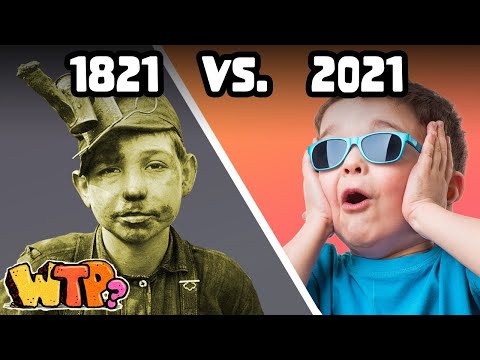
Was childhood better 50 years ago than today?
Learn topic-related expressions and join the speaking club to practice them!


I am a certified TEFL instructor and native English teacher with hands-on experience delivering English due to my experience abroad in Hong Kong. I specialize in creating inclusive, judgment-free classrooms that adapt to diverse learners, including SEN students, using CLT and task-based methods, and I am currently pursuing IELTS certification to further strengthen my qualifications. I enjoy connecting with students from all backgrounds and am committed to helping them build confidence and skills through engaging, supportive instruction.
 2 Gold Tickets

Topic guide Optional
A quick way to understand the topic and find useful language. Read as much or as little as you like.
1-minute overview
Looking back fifty years, many adults remember childhoods of roaming streets, playing outside until dusk and entertaining themselves with little supervision. Research on parents\' views suggests that many feel their own childhood was better for independent play and for limiting screens, even though their children now have more structured activities. Evidence also indicates that children\'s independent mobility and outdoor play have declined in recent decades.
Yet nostalgia can distort memory. Today\'s children generally benefit from better healthcare, greater awareness of mental health, less tolerance of physical punishment, and unprecedented access to information and connection. Earlier decades also had their own hardships, including stricter discipline, less support for children with special needs, and more hidden harm.
The discussion also touches on family size, parenting styles, routines, chores and where children grow up. The key tensions are freedom versus safety, structure versus spontaneity, and independence versus protection. Each generation may be trading some risks and benefits for others, rather than simply gaining or losing.
Useful vocabulary
Approx. CEFR · Topic relevance
nostalgia
/nɑˈstældʒə/A sentimental longing for the past, often idealizing it.
Is our praise of the 1970s real memory or simply nostalgia?
helicopter parenting
An overprotective style of parenting in which parents hover over a child\'s activities and decisions.
Helicopter parenting may keep children safe but limit their resilience.
autonomy
/ɔˈtɑnəmi/The ability to make one\'s own decisions and act independently.
Chores can give children a sense of autonomy and responsibility.
resilience
/rɪˈzɪljəns/The capacity to recover from difficulty and adapt to hardship.
Some argue that small failures in childhood build resilience.
permissive
/pərˈmɪsɪv/Allowing a great deal of freedom, with few rules or limits.
A permissive style can feel warm but may leave children without clear boundaries.
sibling rivalry
Competition or jealousy between brothers and sisters.
Sibling rivalry can be exhausting, yet it often teaches negotiation.
Useful expressions
That may be true to a degree, but
Partly accepting a claim before qualifying it.
That may be true to a degree, but memories of freedom often ignore the risks children faced.
It comes down to whether
Identifying the central issue behind a debate.
It comes down to whether safety or independence matters more at a given age.
By the same token
Adding a parallel point that follows the same logic.
Strict rules can protect children; by the same token, they can limit their confidence.
What are we really comparing here?
Challenging the terms or assumptions of a comparison.
What are we really comparing here: childhood itself or our memories of it?
Much depends on
Qualifying a generalization by naming the key factor.
Much depends on the family\'s income, neighborhood and support network.
Sources & further reading
Question list
- Ice breaking
- Main topic
- Free talk
| Q1. | Is there a scent that immediately takes you back to a specific time in your life? |
|---|---|
| Q2. | How do you regain motivation when nothing feels inspiring? |
| Q3. | How has your relationship with fear changed throughout your life? |
| Q4. | How do you set priorities when everything feels important? |
| Q5. | What is the weirdest or most unique item you own? |
| Q6. | What is the role of forgiveness in society? |
| Q7. | Do you agree that we should always respect our elders? |
| Q8. | What is one thing you would like to do before you die? |
| Q1. | Was childhood better 50 years ago than today? |
|---|---|
| Q2. | Is it better to be an only child or to have siblings? |
| Q3. | Are strict parents better for children than lenient parents? |
| Q4. | Did you have more freedom or less freedom as a child compared to children today? |
| Q5. | Is it important for children to have a regular daily routine? |
| Q6. | Should children be given household chores? |
| Q7. | Is it better for children to grow up in the city or in the countryside? |
| Q8. | What is the most important lesson you learned in childhood? |
| Q1. | How do you think we can address the issue of mental health stigma? |
|---|---|
| Q2. | How do you explain your perspective to stubborn people? |
| Q3. | Unique street foods often become local treasures. What’s the most unusual street food you’ve tasted? |
| Q4. | What makes you feel connected to communities? |
| Q5. | How do you communicate needs without sounding demanding? |
| Q6. | Which fictional character would make the worst roommate and why? |
| Q7. | Who has changed your view on friendship or love? |
| Q8. | What makes bonding moments memorable? |
Rules


Please be kind and respectful.
Note: You can be banned for violating any of these rules
No flirting! Don't ask for other people's social network, number etc. if he/she refuses to give them.
Note: You can be banned for violating any of these rules
Give others an equal opportunity to speak.
Note: You can be banned for violating any of these rules
Avoid Smoking / Drinking while you are talking.
Note: You can be banned for violating any of these rules
Turning your camera on is mandatory.
Note: You can be banned for violating any of these rules
Ready to join the conversation?
Book your spot and bring your perspective to the discussion.