
What If Everyone Could See Your Mood?
Learn topic-related expressions and join the speaking club to practice them!


Marhaban everyone! my name is Bilel and I'm from Tunisia . I have a bachelor's degree in English (International Relations). I have worked as a translator, International Business Developer and a director in a teaching center. After COVID, I started my carrier as a part-time English teacher in Tunis, the capital city of Tunisia. I'm an ambitious person, and never give up my dream of working for the Ministry of Foreign Affairs of Tunisia, and why not be an ambassador someday!?
I'm thrilled to see you all in the Langclub sessions.

Topic guide Optional
A quick way to understand the topic and find useful language. Read as much or as little as you like.
1-minute overview
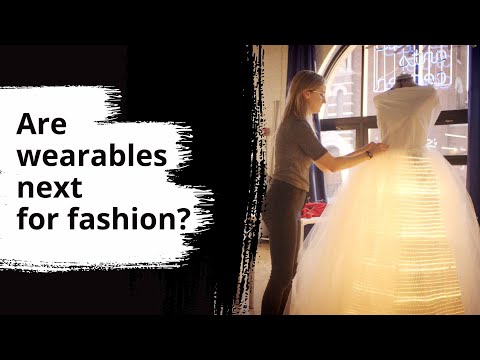
Imagine a world in which a wearable, phone, or public display translated your inner state into a simple signal: calm, stressed, cheerful, or withdrawn. Such a system could make emotional needs easier to notice, especially when someone struggles to find the right words. Friends might respond with more patience, and a quiet colleague could receive support before a difficult moment becomes a crisis. Yet moods are temporary, mixed, and strongly shaped by context; a display might simplify them too much.
The idea also turns privacy into a social question, rather than merely a technical one. Is an unreadable mood a personal boundary, or does openness create stronger relationships? In workplaces, visible moods could promote understanding but also invite judgment, pressure, and unfair assumptions about competence. A device would have to distinguish between a passing reaction and a meaningful emotional state, while allowing people to correct it or turn it off. The central tension is between empathy gained through visibility and the freedom to decide what remains private.
The idea also turns privacy into a social question, rather than merely a technical one. Is an unreadable mood a personal boundary, or does openness create stronger relationships? In workplaces, visible moods could promote understanding but also invite judgment, pressure, and unfair assumptions about competence. A device would have to distinguish between a passing reaction and a meaningful emotional state, while allowing people to correct it or turn it off. The central tension is between empathy gained through visibility and the freedom to decide what remains private.
Useful vocabulary
Approx. CEFR · Topic relevance
emotional transparency
The degree to which a person’s feelings are visible to others.
Emotional transparency may build trust in close friendships, but it can feel intrusive at work.
affective computing
Technology designed to recognize, interpret, or respond to human emotions.
Affective computing may be useful for accessibility, but its conclusions should be open to challenge.
consent
Freely given permission for something to happen or be done.
A mood display would be more acceptable if consent could be withdrawn at any time.
contextual cue
Information from a situation that helps explain someone’s behavior or feelings.
A tired expression is not enough; we need contextual cues before deciding that someone is unhappy.
misinterpretation
/ˌmɪsɪnˌtɜrprəˈteɪʃən/An incorrect understanding of a person, message, or situation.
A small misinterpretation by a device could damage trust between colleagues.
emotional labor
The effort of managing or displaying feelings to meet social or professional expectations.
If workers were expected to look positive all day, emotional labor could become exhausting.
Useful expressions
That depends heavily on the context.
Use this to show that a simple answer may not apply in every situation.
That depends heavily on the context: a visible mood may help at home but create pressure in an office.
We should separate intention from impact.
Use this to distinguish a system’s purpose from its real-world effects.
We should separate intention from impact: the goal may be support, but the result may be surveillance.
The benefit comes with a trade-off.
Use this to acknowledge both an advantage and a cost.
The benefit comes with a trade-off: greater openness may mean less control over personal information.
I would be cautious about drawing conclusions from that.
Use this to question evidence or an assumption without rejecting it completely.
I would be cautious about drawing conclusions from that, because a facial expression can have many meanings.
The key issue is who has control over it.
Use this to focus the discussion on power and decision-making.
The key issue is who has control over it: the individual, an employer, or the company that made the device?
Sources & further reading
Question list
- Ice breaking
- Main topic
- Free talk
| Q1. | What’s a place where you feel a deep sense of belonging? |
|---|---|
| Q2. | If you could change one thing about yourself, what would it be? |
| Q3. | Which celeb would you want as your BFF and why? |
| Q4. | If you could revisit a place that shaped your identity, which place matters most? |
| Q5. | What object in your room has a memory attached to it? |
| Q6. | Where did you last feel deeply connected to someone? |
| Q7. | What (types of) programmes did you watch when you were a child? |
| Q8. | What things can we do to reduce stress in our lives? |
| Q1. | Would you like people to know your mood without asking? |
|---|---|
| Q2. | When could visible moods help friends understand each other? |
| Q3. | Could a visible mood cause problems at work? |
| Q4. | How often do people hide how they really feel? |
| Q5. | Would you trust a device to show your mood correctly? |
| Q6. | Who should be able to turn the display off? |
| Q7. | Could seeing every mood make people kinder? |
| Q8. | What would you do if a friend looked unhappy but said nothing? |
| Q1. | What is your favorite way to spend your free time and why? |
|---|---|
| Q2. | Weddings vary greatly by region and culture. Have you attended a wedding that surprised or moved you? |
| Q3. | What about the future excites you most? |
| Q4. | What are some of the most memorable or impactful news stories you've followed on social media? |
| Q5. | What are your thoughts on the use of divination tools, such as tarot cards or astrology, as a means of gaining insight or guidance in life? |
| Q6. | What is your favorite hobby or pastime? |
| Q7. | Water has symbolic meanings in many cultures. How do you personally connect with water—whether lakes, rivers, or oceans? |
| Q8. | What motivates you to be your best self? |
Rules


Please be kind and respectful.
Note: You can be banned for violating any of these rules
No flirting! Don't ask for other people's social network, number etc. if he/she refuses to give them.
Note: You can be banned for violating any of these rules
Give others an equal opportunity to speak.
Note: You can be banned for violating any of these rules
Avoid Smoking / Drinking while you are talking.
Note: You can be banned for violating any of these rules
Turning your camera on is mandatory.
Note: You can be banned for violating any of these rules
Ready to join the conversation?
Book your spot and bring your perspective to the discussion.