What If Residents Could Decide How Their City Spends Its Budget?
Learn topic-related expressions and join the speaking club to practice them!


Marhaban everyone! my name is Bilel and I'm from Tunisia . I have a bachelor's degree in English (International Relations). I have worked as a translator, International Business Developer and a director in a teaching center. After COVID, I started my carrier as a part-time English teacher in Tunis, the capital city of Tunisia. I'm an ambitious person, and never give up my dream of working for the Ministry of Foreign Affairs of Tunisia, and why not be an ambassador someday!?
I'm thrilled to see you all in the Langclub sessions.

Topic guide Optional
A quick way to understand the topic and find useful language. Read as much or as little as you like.
1-minute overview
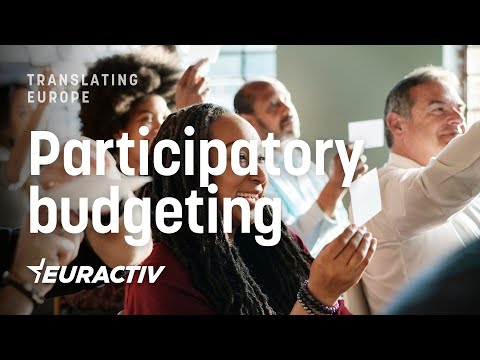
Participatory budgeting is a process in which residents help decide how to spend a defined portion of public money. Rather than voting only for political representatives, people can suggest projects, discuss local needs, and choose among proposals such as safer crossings, youth programs, tree planting, park repairs, or bus shelters. City staff usually check whether ideas are legal, affordable, and realistically deliverable before they reach a final vote.
The appeal is clear: local people may understand everyday problems that are invisible in a central budget office, and even modest projects can improve daily life. However, giving residents a vote does not automatically make a process fair. People with more free time, stronger digital access, or greater confidence in public meetings may be heard more easily than renters, migrants, disabled residents, shift workers, or young people. The key questions are how much money should be open to public choice, how proposals should be compared, and how a city can explain both winning projects and difficult trade-offs honestly.
The appeal is clear: local people may understand everyday problems that are invisible in a central budget office, and even modest projects can improve daily life. However, giving residents a vote does not automatically make a process fair. People with more free time, stronger digital access, or greater confidence in public meetings may be heard more easily than renters, migrants, disabled residents, shift workers, or young people. The key questions are how much money should be open to public choice, how proposals should be compared, and how a city can explain both winning projects and difficult trade-offs honestly.
Useful vocabulary
Approx. CEFR · Topic relevance
participatory budgeting
A system in which residents directly help decide how part of a public budget is spent.
Participatory budgeting could give each neighborhood a real say in small infrastructure projects.
public funds
Money controlled by government and intended for public purposes.
I would spend public funds first on services that benefit people who have few alternatives.
feasibility
/ˌfiːzəˈbɪləti/The practical possibility of doing something successfully within real limits.
A proposal may be popular, but its feasibility depends on land, staffing, and maintenance costs.
trade-off
A necessary compromise between two desirable but competing choices.
There is a trade-off between funding many small projects and one major transport improvement.
outreach
/ˈaʊtˌriːtʃ/Efforts to connect with and involve people who may not participate on their own.
Good outreach would include translated materials and events at libraries, schools, and markets.
accountability
/əˌkaʊntəˈbɪləti/The duty to explain decisions and accept responsibility for results.
A public project tracker could improve accountability after the vote is over.
Useful expressions
The crucial distinction is between ... and ...
Use this to separate two ideas that are often confused.
The crucial distinction is between collecting opinions and giving residents decision-making power.
That approach may work in principle, but ...
Use this to recognize an idea while raising a practical concern.
That approach may work in principle, but it could exclude people without reliable internet access.
The benefits need to be weighed against ...
Use this to compare advantages with costs or risks.
The benefits need to be weighed against the time and money required to organize a fair vote.
A more equitable model would ...
Use this to propose a fairer alternative.
A more equitable model would combine online voting with face-to-face outreach.
The real test is whether ...
Use this to focus the discussion on evidence or outcomes.
The real test is whether the selected projects are completed and improve daily life.
Sources & further reading
Question list
- Ice breaking
- Main topic
- Free talk
| Q1. | Do you prefer traveling alone or with others? Why? |
|---|---|
| Q2. | What’s a practice or ritual that helps you cultivate a sense of belonging? |
| Q3. | Have you ever been surprised by your ability to adapt in difficult situations? |
| Q4. | Where do you think you communicate best? |
| Q5. | Where does your imagination travel at night? |
| Q6. | Describe a moment when you felt completely in tune with your surroundings. |
| Q7. | If you could go back and relive one day in your life without changing anything about it, which day would you revisit? |
| Q8. | How do you maintain hope during uncertain or challenging times? |
| Q1. | What would you improve first in your city? |
|---|---|
| Q2. | Should residents choose how some public money is spent? |
| Q3. | How could a city collect ideas from residents? |
| Q4. | Would you spend more on parks or public transport? |
| Q5. | Who might be left out of a public vote? |
| Q6. | Could small local projects make a big difference? |
| Q7. | How should a city explain its final decision? |
| Q8. | Would you take part if your city offered this choice? |
| Q1. | Throughout childhood, many people cherish bedtime stories. Which tale remains vivid for you? |
|---|---|
| Q2. | How do you handle people who avoid responsibility? |
| Q3. | How do you define success, and how do you measure it in your own life? |
| Q4. | If you could be reborn as an animal, which would you choose? |
| Q5. | How do you handle the fear of the unknown or uncertainty when setting goals or taking risks in your pursuit of success? |
| Q6. | Dreams often reveal hidden thoughts. Have you ever had a dream that influenced a decision in your life? |
| Q7. | What is one thing you would like to change about the world? |
| Q8. | Would you rather be deeply respected or widely liked? Why? |
Rules


Please be kind and respectful.
Note: You can be banned for violating any of these rules
No flirting! Don't ask for other people's social network, number etc. if he/she refuses to give them.
Note: You can be banned for violating any of these rules
Give others an equal opportunity to speak.
Note: You can be banned for violating any of these rules
Avoid Smoking / Drinking while you are talking.
Note: You can be banned for violating any of these rules
Turning your camera on is mandatory.
Note: You can be banned for violating any of these rules
Ready to join the conversation?
Book your spot and bring your perspective to the discussion.