What If Your Neighborhood Shared One Dinner Every Sunday?
Learn topic-related expressions and join the speaking club to practice them!


Hi! I’m Evelyn. I’m from Taiwan and currently doing a Master’s degree in occupational therapy in Australia. I love meeting new people and chatting with people from different backgrounds. I’m really looking forward to having great conversations with you!

Topic guide Optional
A quick way to understand the topic and find useful language. Read as much or as little as you like.
1-minute overview
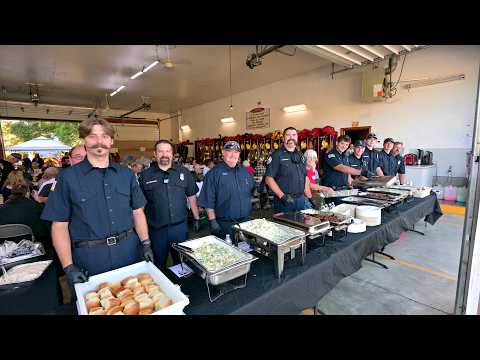
Imagine that, every Sunday, a street, apartment building, or small block paused for one shared dinner. It could be a potluck in a garden, a rotating meal in different homes, or simple soup in a community room. The attraction is not only food: regular, low-pressure contact can turn familiar faces into people who notice when someone needs help, welcome newcomers, or exchange local knowledge. Research links shared meals with social connection and wellbeing, although a dinner alone cannot create trust or solve loneliness.
Yet a good idea can become demanding if a few people always host, cook, pay, or clean. Work schedules, childcare, noise, limited space, dietary needs, allergies, religious rules, and different expectations about alcohol can all affect who feels included. A durable tradition might need modest ambitions: optional attendance, clear food labels, affordable contributions, a rotating rota, and alternatives for people who cannot cook. The central issue is whether neighbors can make hospitality feel generous without making participation feel like an obligation.
Yet a good idea can become demanding if a few people always host, cook, pay, or clean. Work schedules, childcare, noise, limited space, dietary needs, allergies, religious rules, and different expectations about alcohol can all affect who feels included. A durable tradition might need modest ambitions: optional attendance, clear food labels, affordable contributions, a rotating rota, and alternatives for people who cannot cook. The central issue is whether neighbors can make hospitality feel generous without making participation feel like an obligation.
Useful vocabulary
Approx. CEFR · Topic relevance
potluck
A shared meal for which each guest brings food or drink.
A potluck would spread the cost and give everyone a chance to contribute.
dietary restriction
A limit on what someone can eat for medical, ethical, or religious reasons.
The organizers should ask about dietary restrictions before choosing the menu.
reciprocity
/ˌrɛsɪˈprɑːsəti/A pattern of people giving support to one another over time.
The dinner could build reciprocity, even when people cannot contribute equally every week.
social cohesion
The sense of trust, connection, and cooperation within a group.
A weekly meal might strengthen social cohesion on a street where people rarely talk.
host fatigue
Tiredness or stress caused by repeatedly organizing events for others.
Without a rotating schedule, host fatigue could end the tradition quickly.
opt-in
Available by choice rather than expected of everyone.
An opt-in system may feel more welcoming to busy or private neighbors.
Useful expressions
The value may lie less in ___ than in ___.
Use this to identify the deeper benefit of an activity.
The value may lie less in the meal itself than in the repeated contact.
That depends partly on how ___ is defined.
Use this to question an assumption or clarify a broad idea.
That depends partly on how fairness is defined in the group.
The practical challenge is to balance ___ against ___.
Use this to compare two competing priorities.
The practical challenge is to balance spontaneity against reliable planning.
A possible unintended consequence is that ___.
Use this to raise a risk without rejecting the idea entirely.
A possible unintended consequence is that quieter neighbors feel pressured to attend.
For it to be sustainable, it would need ___.
Use this to move from an appealing idea to realistic conditions.
For it to be sustainable, it would need shared responsibility and flexible participation.
Question list
- Ice breaking
- Main topic
- Free talk
| Q1. | What unusual talent would you like to have? |
|---|---|
| Q2. | Do you think people who get happy easily can get sad easily too? |
| Q3. | What simple task makes you feel accomplished? |
| Q4. | What activities make you happiest? Do you do them often? |
| Q5. | Do you like to swim? If so, where is your favorite place to swim? |
| Q6. | What’s something you enjoy that others might not fully understand? |
| Q7. | Where do you find motivation returning naturally? |
| Q8. | When was the last time you did something nice for someone completely unprompted? |
| Q1. | How well do you know your neighbors? |
|---|---|
| Q2. | Would you join a shared neighborhood dinner? |
| Q3. | What dish would you bring? |
| Q4. | Could weekly meals help new neighbors feel welcome? |
| Q5. | What might make planning the dinner difficult? |
| Q6. | Should everyone help cook or clean? |
| Q7. | Would you prefer a small group or the whole street? |
| Q8. | Could this tradition last for many years? |
| Q1. | How do you think the concept of "overtourism" has affected popular travel destinations, and what can be done to mitigate its negative impacts? |
|---|---|
| Q2. | Which matters more in the long run: ambition or contentment? |
| Q3. | Tell me about a time when curiosity led you somewhere unexpected, either literally or metaphorically. |
| Q4. | What's your favorite flower? |
| Q5. | How do you find balance in your life between work, relationships, and personal interests? |
| Q6. | How do you stay adaptable in unpredictable situations? |
| Q7. | What do you think the future of the holidays will be like? |
| Q8. | If you could travel anywhere in the world right now, where would you go? |
Rules


Please be kind and respectful.
Note: You can be banned for violating any of these rules
No flirting! Don't ask for other people's social network, number etc. if he/she refuses to give them.
Note: You can be banned for violating any of these rules
Give others an equal opportunity to speak.
Note: You can be banned for violating any of these rules
Avoid Smoking / Drinking while you are talking.
Note: You can be banned for violating any of these rules
Turning your camera on is mandatory.
Note: You can be banned for violating any of these rules
Ready to join the conversation?
Book your spot and bring your perspective to the discussion.