
What is more powerful: habit or motivation?
Learn topic-related expressions and join the speaking club to practice them!
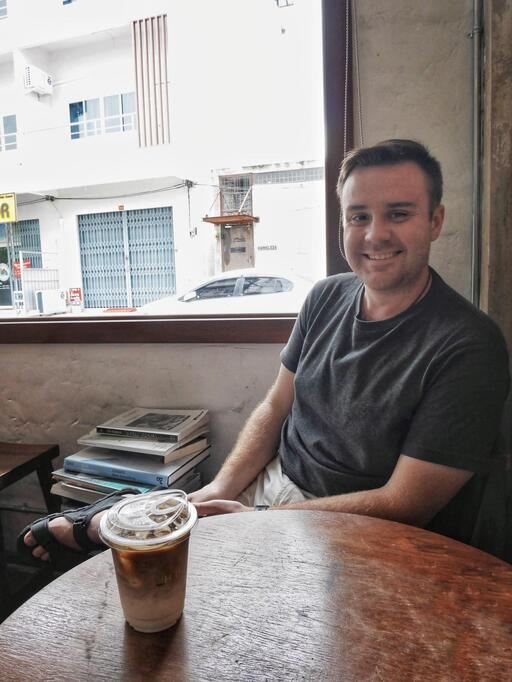

I'm Teacher Michael, a licensed English teacher.
I'm originally from the United States, but I have been working as a full-time TEFL-certified high school English teacher in Thailand since 2013. I have a Bachelor's Degree in International Relations and I am currently studying for my Master's Degree in Liberal Arts.

Topic guide Optional
A quick way to understand the topic and find useful language. Read as much or as little as you like.
1-minute overview
Motivation is the energy or desire that makes us begin; habits are actions that become increasingly automatic in a familiar context. For long-term goals, they are often presented as rivals, yet they may do different jobs. Motivation can help someone choose a goal, experiment with a new behaviour, or restart after failure. Habits can reduce the number of daily decisions required to continue it.
The evidence does not support a universal timetable such as 21 days. One influential study found wide variation, from 18 to 254 days, depending on the person and behaviour. This raises practical and ethical questions: should we design strict routines, or preserve room for spontaneity, rest, and changing circumstances? Technology can supply reminders, tracking, and social accountability, but it can also create pressure or dependence.
A useful distinction is between consistency and perfection. Small repeated actions may be sustainable, while occasional intense effort can be valuable for goals that require it. The central issue is whether a routine supports a meaningful life rather than merely making it more controlled.
The evidence does not support a universal timetable such as 21 days. One influential study found wide variation, from 18 to 254 days, depending on the person and behaviour. This raises practical and ethical questions: should we design strict routines, or preserve room for spontaneity, rest, and changing circumstances? Technology can supply reminders, tracking, and social accountability, but it can also create pressure or dependence.
A useful distinction is between consistency and perfection. Small repeated actions may be sustainable, while occasional intense effort can be valuable for goals that require it. The central issue is whether a routine supports a meaningful life rather than merely making it more controlled.
Useful vocabulary
Approx. CEFR · Topic relevance
automaticity
The ability to do an action with little conscious thought because it has been repeated many times.
The goal of a habit is not perfection but greater automaticity.
cue
A signal or situation that prompts a particular behaviour.
Leaving my running shoes by the door is a cue to exercise.
friction
A small difficulty that makes an action less convenient or less likely to happen.
If healthy food takes longer to prepare, that friction may weaken the habit.
lapse
A temporary return to an unwanted behaviour or a break in a planned routine.
Missing one day is a lapse, not necessarily the end of the habit.
self-regulation
The ability to manage your emotions, attention, and behaviour in pursuit of a goal.
Good self-regulation can help people continue when motivation is low.
accountability
A situation in which you are expected to explain or take responsibility for your actions.
A study partner can create accountability without being controlling.
Useful expressions
The stronger argument, in my view, is that ...
Use this to state a considered position after recognizing more than one side.
The stronger argument, in my view, is that habits matter most after motivation has started the process.
That may be true in the short term, but ...
Use this to qualify an idea by contrasting immediate and lasting effects.
That may be true in the short term, but a strict routine can become exhausting over time.
We should distinguish between ... and ...
Use this to separate two ideas that are often treated as identical.
We should distinguish between being consistent and being perfect.
Much depends on whether ...
Use this to show that the answer changes according to context.
Much depends on whether the routine is chosen freely or imposed by someone else.
I would challenge the assumption that ...
Use this to question an unstated belief in a respectful, analytical way.
I would challenge the assumption that every bad habit must be eliminated completely.
Question list
- Ice breaking
- Main topic
- Free talk
| Q1. | What’s a place you’ve visited that completely exceeded your expectations? |
|---|---|
| Q2. | How do you stay brave while trying something unfamiliar? |
| Q3. | What motivates you most in life, and why is it important to you? |
| Q4. | What’s a lesson you’ve learned about resilience from your own experiences? |
| Q5. | Describe a community or group that shaped your personal growth journey. |
| Q6. | Have you ever discovered something new about yourself through travel? |
| Q7. | Which musical genre do you enjoy the most and why? |
| Q8. | What is your favorite short story and why? |
| Q1. | Are habits more important than motivation when trying to achieve long-term goals? |
|---|---|
| Q2. | Should people follow strict daily routines or remain flexible? |
| Q3. | Can too much structure make life less enjoyable? |
| Q4. | How long does it realistically take to develop a new habit? |
| Q5. | Should people eliminate bad habits completely or gradually reduce them? |
| Q6. | Are morning routines genuinely beneficial or overrated? |
| Q7. | Can technology help people develop better habits? |
| Q8. | Should parents control their children's daily routines? |
| Q9. | Is consistency more important than intensity when building a habit? |
| Q10. | Can changing your daily routine significantly change your personality or life? |
| Q1. | How would you live your life if you knew you would not fail? |
|---|---|
| Q2. | Which one of your friends do you like the most? Why? |
| Q3. | How does the concept of beauty differ across various cultures? |
| Q4. | What helps you recognize when a goal is no longer right for you? |
| Q5. | Why do humans enjoy sharing stories about meaningful experiences? |
| Q6. | What makes a place feel welcoming to you? |
| Q7. | How has your culture influenced global trends? |
| Q8. | How do you find balance in your life between work, relationships, and personal interests? |
Rules


Please be kind and respectful.
Note: You can be banned for violating any of these rules
No flirting! Don't ask for other people's social network, number etc. if he/she refuses to give them.
Note: You can be banned for violating any of these rules
Give others an equal opportunity to speak.
Note: You can be banned for violating any of these rules
Avoid Smoking / Drinking while you are talking.
Note: You can be banned for violating any of these rules
Turning your camera on is mandatory.
Note: You can be banned for violating any of these rules
Ready to join the conversation?
Book your spot and bring your perspective to the discussion.