
What Makes a Neighborhood a Good Place to Live?
Learn topic-related expressions and join the speaking club to practice them!


Hello everyone! I'm Geetanjali Tiwari from New Delhi, India. I recently graduated in English and Political Science, and I'm looking forward to beginning my master's journey.I'm an avid reader, a curious learner, and someone who loves meaningful conversations. I believe that language is more than just words, it's a way to connect with people, exchange ideas, and understand different cultures.
That's what I enjoy most about LangClub, and I'm excited to create a welcoming space where we can all learn from one another.

Topic guide Optional
A quick way to understand the topic and find useful language. Read as much or as little as you like.
1-minute overview
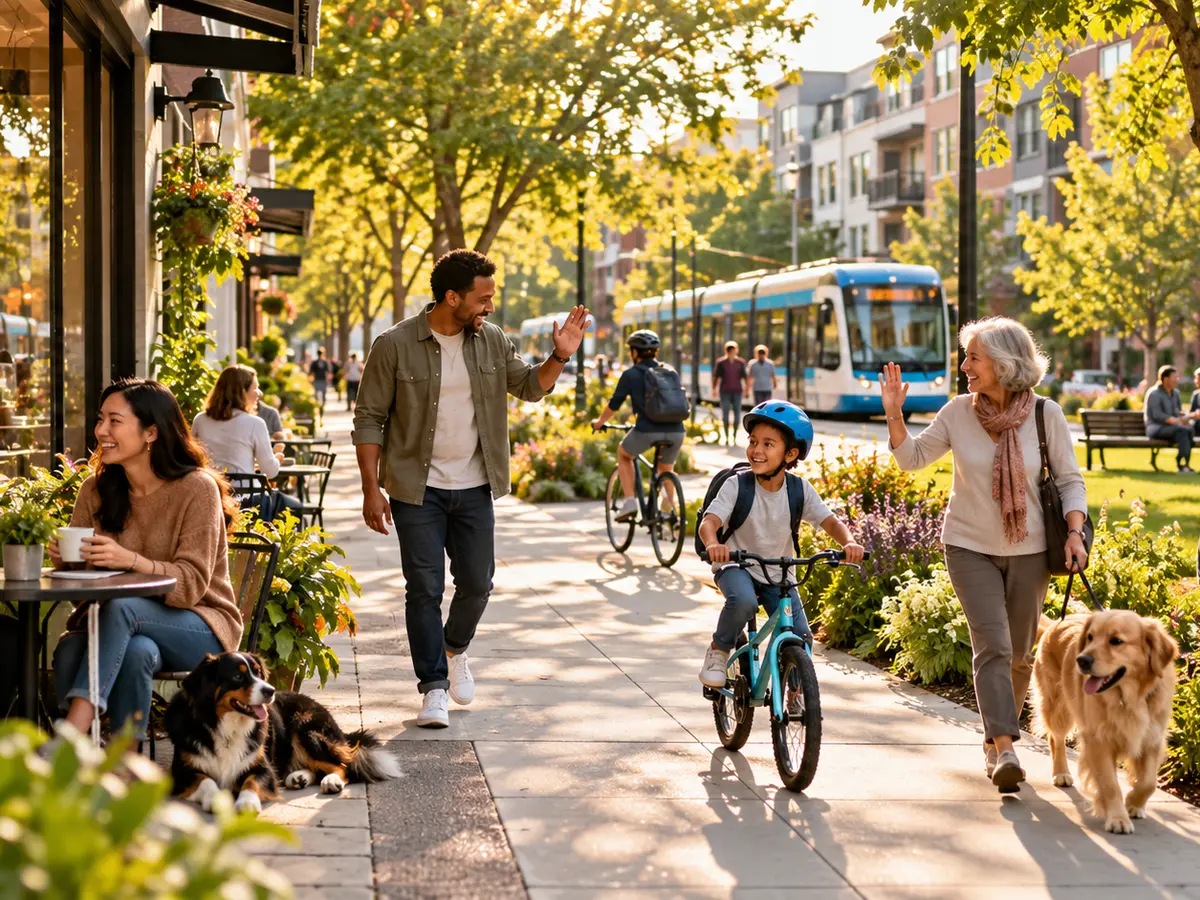
A good neighborhood is more than a collection of houses; it is a daily environment that shapes how easily people can travel, relax, buy essentials, and connect with others. Many people value walkable streets, reliable public transport, nearby shops, and parks that are pleasant at different times of day. Green spaces can support exercise, relaxation, and informal social contact, but their value depends on whether they feel safe, well maintained, and genuinely accessible.
There is no single ideal balance. Some residents want familiar faces and spontaneous conversations, while others prefer anonymity and quiet. Busy streets may offer cafés, jobs, and convenient services, yet also bring noise, traffic, and higher rents. Safety involves more than crime rates: lighting, street design, traffic speed, cleanliness, and the feeling that people look out for one another all matter. A neighborhood can therefore be convenient without being welcoming, or friendly without meeting practical needs. The central challenge is creating places that work for people of different ages, incomes, routines, and preferences.
There is no single ideal balance. Some residents want familiar faces and spontaneous conversations, while others prefer anonymity and quiet. Busy streets may offer cafés, jobs, and convenient services, yet also bring noise, traffic, and higher rents. Safety involves more than crime rates: lighting, street design, traffic speed, cleanliness, and the feeling that people look out for one another all matter. A neighborhood can therefore be convenient without being welcoming, or friendly without meeting practical needs. The central challenge is creating places that work for people of different ages, incomes, routines, and preferences.
Useful vocabulary
Approx. CEFR · Topic relevance
walkability
/ˌwɔːkəˈbɪləti/The ease, comfort, and safety of reaching places on foot.
Walkability matters to me because I like doing small errands without using a car.
social cohesion
The sense of trust, connection, and mutual support among people in a community.
Local events can strengthen social cohesion without forcing neighbors to become close friends.
amenity
/əˈmiːnəti/A useful or enjoyable local feature, such as a library, café, park, or grocery store.
A small grocery store is an amenity that makes everyday life much easier.
perceived safety
How safe a place feels to people, whether or not this matches measured crime levels.
Good lighting can improve perceived safety for people walking home at night.
mixed-use
Describing an area that combines homes with shops, offices, services, or leisure spaces.
I prefer mixed-use streets because they usually feel active throughout the day.
displacement
/dɪˈspleɪsmənt/The process in which residents must leave an area, often because housing costs rise.
New parks and transit can improve an area, but cities should also prevent displacement.
Useful expressions
It depends on whose needs we prioritize.
Use this to point out that a neighborhood may work differently for different groups.
A quiet street sounds ideal, but it depends on whose needs we prioritize: families, older residents, or young workers.
There is a trade-off between convenience and tranquility.
Use this to compare the benefits and drawbacks of a busy location.
There is a trade-off between convenience and tranquility when shops stay open late.
The issue is not simply access, but quality of access.
Use this to distinguish nearby services from services that are affordable, safe, or reliable.
The issue is not simply access, but quality of access, because an unreliable bus route is not very useful.
That may improve daily life without solving the underlying problem.
Use this to acknowledge a benefit while questioning whether it is enough.
More streetlights may improve daily life without solving the underlying problem of unsafe traffic.
We should distinguish between feeling safe and being statistically safe.
Use this to separate personal impressions from data about risk.
We should distinguish between feeling safe and being statistically safe when discussing neighborhood crime.
Sources & further reading
Question list
- Ice breaking
- Main topic
- Free talk
| Q1. | What is your favorite way to relax and unwind after a long day? |
|---|---|
| Q2. | What is your definition of happiness? |
| Q3. | What do you think of when you hear the word ‘technology’? |
| Q4. | What is the best piece of business advice you've ever received? |
| Q5. | What are you most afraid of? |
| Q6. | Picture yourself revisiting your favorite place from childhood. What do you notice now? |
| Q7. | Are you a quiet or a loud person? |
| Q8. | How do you stay optimistic during challenging or uncertain times? |
| Q1. | What makes you feel comfortable in a neighborhood? |
|---|---|
| Q2. | How important are parks and green spaces near your home? |
| Q3. | Would you prefer friendly neighbors or more privacy? |
| Q4. | Which local places help neighbors meet each other? |
| Q5. | How much does public transport affect where people choose to live? |
| Q6. | What makes a neighborhood feel unsafe? |
| Q7. | Should neighborhoods have shops within walking distance? |
| Q8. | What would you change about the area where you live? |
| Q1. | What moment recently felt meaningful unexpectedly? |
|---|---|
| Q2. | What small improvement would make your life easier? |
| Q3. | When should you compromise in a relationship? |
| Q4. | What’s your favorite way to spend a long weekend? |
| Q5. | There are countless inventions in history. Which one do you think had the most unexpected impact? |
| Q6. | Rivers shape landscapes and societies alike. Is there a river you feel connected to in any way? |
| Q7. | Why do we sometimes overlook opportunities right in front of us? |
| Q8. | How can you change the world to make it a better place? |
Rules


Please be kind and respectful.
Note: You can be banned for violating any of these rules
No flirting! Don't ask for other people's social network, number etc. if he/she refuses to give them.
Note: You can be banned for violating any of these rules
Give others an equal opportunity to speak.
Note: You can be banned for violating any of these rules
Avoid Smoking / Drinking while you are talking.
Note: You can be banned for violating any of these rules
Turning your camera on is mandatory.
Note: You can be banned for violating any of these rules
Ready to join the conversation?
Book your spot and bring your perspective to the discussion.