
Why do some countries measure "gross national happiness"?
Learn topic-related expressions and join the speaking club to practice them!


I'm Teacher Michael, a licensed English teacher.
I'm originally from the United States, but I have been working as a full-time TEFL-certified high school English teacher in Thailand since 2013. I have a Bachelor's Degree in International Relations and I am currently studying for my Master's Degree in Liberal Arts.

Topic guide Optional
A quick way to understand the topic and find useful language. Read as much or as little as you like.
1-minute overview
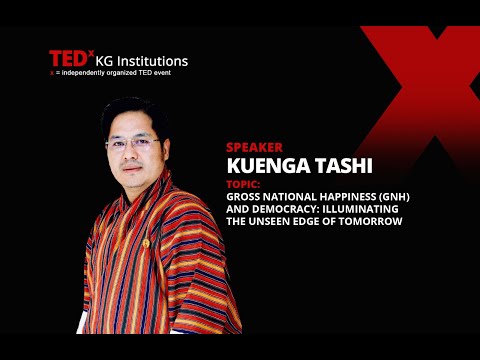
Gross national happiness, or GNH, is an approach to national progress most closely associated with Bhutan. Rather than treating economic output as the main sign of success, it asks whether people can live healthy, meaningful, secure, and sustainable lives. Bhutan’s framework connects well-being to areas such as health, education, community life, culture, environmental protection, time use, and governance.
The idea does not require governments to decide what makes every individual happy. Supporters argue that income statistics alone can hide loneliness, inequality, stress, poor mental health, or environmental damage. Critics respond that happiness is partly subjective, culturally shaped, and vulnerable to political misuse. A state that promotes “the good life” may provide valuable public services, but it may also pressure minorities or restrict choices in the name of social harmony. The central tension is whether happiness data should complement measures such as GDP and political freedom, or whether it gives governments too much authority over private values.
The idea does not require governments to decide what makes every individual happy. Supporters argue that income statistics alone can hide loneliness, inequality, stress, poor mental health, or environmental damage. Critics respond that happiness is partly subjective, culturally shaped, and vulnerable to political misuse. A state that promotes “the good life” may provide valuable public services, but it may also pressure minorities or restrict choices in the name of social harmony. The central tension is whether happiness data should complement measures such as GDP and political freedom, or whether it gives governments too much authority over private values.
Useful vocabulary
Approx. CEFR · Topic relevance
gross national happiness
A framework for judging national progress through collective well-being, not economic growth alone.
GNH suggests that a country can become richer without necessarily becoming a better place to live.
subjective well-being
People’s own evaluation of their lives, feelings, and sense of satisfaction.
Subjective well-being surveys can reveal problems that income data does not show.
composite index
A single measure that combines several different indicators.
A composite index can include health, education, trust, and environmental quality.
trade-off
A situation in which gaining one benefit requires accepting a cost elsewhere.
There may be a trade-off between shorter working hours and higher household income.
paternalism
Government action that limits people’s choices because it claims to protect or benefit them.
Critics may call a ban on certain products paternalism, even if it improves public health.
consumerism
A culture that encourages buying goods as a major source of identity or satisfaction.
Consumerism may create temporary pleasure while also making people feel they never have enough.
Useful expressions
It depends on how we define progress.
Use this to question the assumptions behind a national measure.
It depends on how we define progress: higher consumption is not the same as a better quality of life.
The key distinction is between ... and ...
Use this to separate two ideas that are often confused.
The key distinction is between helping people pursue happiness and telling them what happiness should mean.
That argument is persuasive up to a point.
Use this to acknowledge an idea while introducing a limitation.
That argument is persuasive up to a point, but average happiness can conceal severe inequality.
We should weigh that against the risk of ...
Use this to introduce a possible cost or unintended consequence.
We should weigh that against the risk of giving the state excessive influence over private life.
A useful measure should complement, rather than replace, ...
Use this to argue for a balanced approach.
A useful measure should complement, rather than replace, economic data, civil liberties, and democratic accountability.
Sources & further reading
Question list
- Ice breaking
- Main topic
- Free talk
| Q1. | Have you ever had a cultural exchange that changed your perspective? |
|---|---|
| Q2. | Is there a place you’ve visited that felt like stepping into another world? |
| Q3. | What is the most adventurous thing you have ever done? |
| Q4. | Where do you think your personality shines most? |
| Q5. | Do you prefer exploring cities or relaxing in nature? |
| Q6. | Describe a random act of kindness you witnessed that deeply touched you. |
| Q7. | Would you rather have a stressful, high paying job or a relaxed, low paying job? |
| Q8. | How do you honor commitments without overextending yourself? |
| Q1. | What is "gross national happiness?" |
|---|---|
| Q2. | What are the biggest issues affecting happiness today? |
| Q3. | Is happiness a legitimate measure of national progress, or is it too subjective to be useful? |
| Q4. | To what extent should governments be responsible for their citizens’ happiness? |
| Q5. | Could policies designed to increase happiness actually reduce individual freedom? |
| Q6. | Does consumerism make people happier, or does it create dissatisfaction by encouraging endless desires? |
| Q7. | Can a government legitimately promote traditional cultural values if they contribute to greater national happiness? |
| Q8. | If a country has high levels of happiness but low political freedom, should it still be considered a successful society? |
| Q1. | What was your first impression of me? |
|---|---|
| Q2. | What helps you stay open to constructive criticism? |
| Q3. | Is social media doing more harm than good? |
| Q4. | What is your favorite chore? What is your least favorite chore? |
| Q5. | What is one simple pleasure you enjoy in your daily life? |
| Q6. | If you could eat dinner with 3 people you don't know, who would it be and where would you go? |
| Q7. | What factors are encouraging the trend of minimalism? |
| Q8. | What habit makes your mornings meaningful? |
Rules


Please be kind and respectful.
Note: You can be banned for violating any of these rules
No flirting! Don't ask for other people's social network, number etc. if he/she refuses to give them.
Note: You can be banned for violating any of these rules
Give others an equal opportunity to speak.
Note: You can be banned for violating any of these rules
Avoid Smoking / Drinking while you are talking.
Note: You can be banned for violating any of these rules
Turning your camera on is mandatory.
Note: You can be banned for violating any of these rules
Ready to join the conversation?
Book your spot and bring your perspective to the discussion.