Would You Buy a Product If You Knew the Maker’s Story?
Learn topic-related expressions and join the speaking club to practice them!

Hi! I’m Daniel, a Systems Engineer and B2B SaaS Sales leader. After years of public speaking, coaching, and stage performance, I believe selling is just clear communication. I’m here in LangClub to sharpen my English for global business, connect with people, and learn about different cultures—which is already happening! Outside of work, I'm a meditation instructor. Let’s make every conversation great!

Topic guide Optional
A quick way to understand the topic and find useful language. Read as much or as little as you like.
1-minute overview
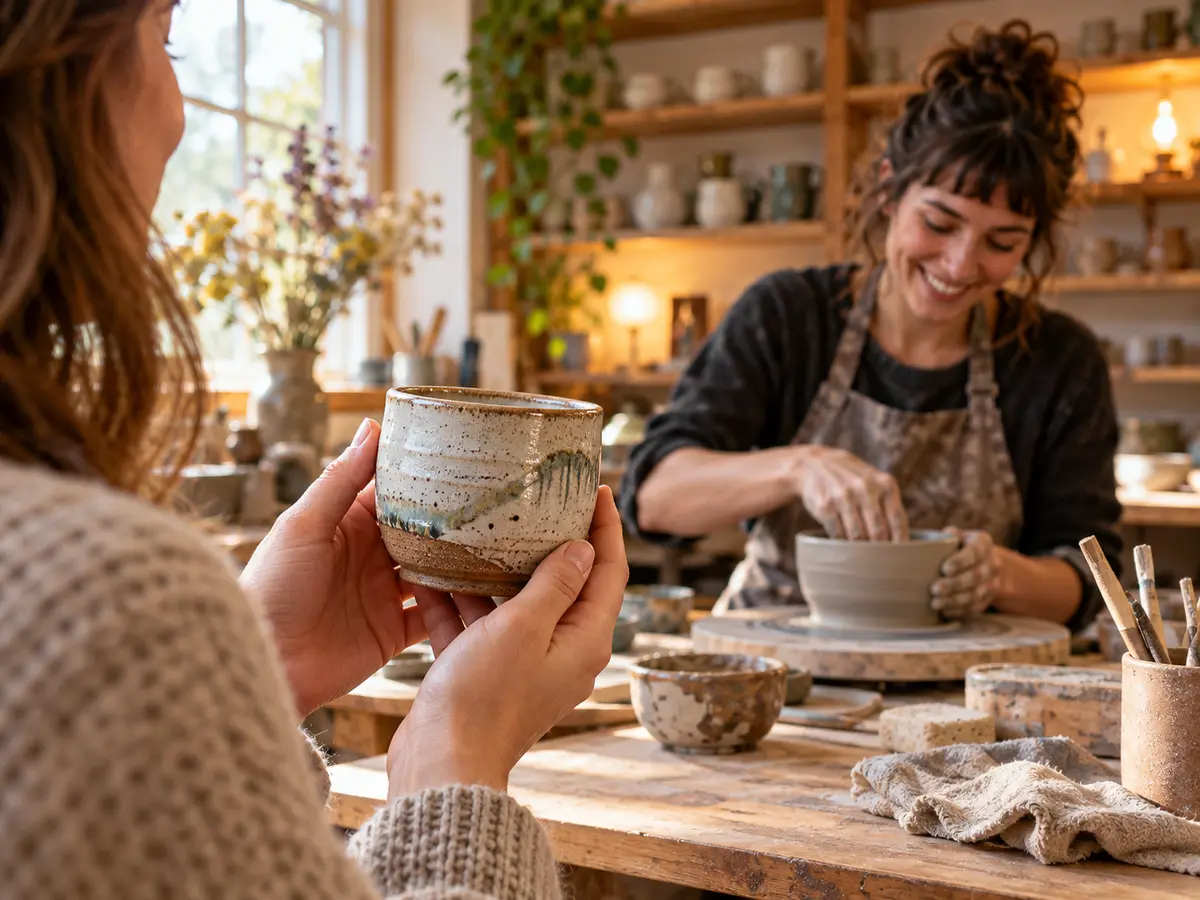
A handmade ceramic cup, a locally roasted coffee, or a jacket sold with a photo of its maker can feel different from an anonymous product. A maker’s story may reveal skill, cultural tradition, working conditions, or the time required to produce something well. For many buyers, that information can turn a purchase into a way of supporting a person or a community.
But stories are also a marketing tool. A warm personal profile does not automatically prove that a product is durable, fairly priced, or responsibly made. “Local,” “handmade,” and “Made in USA” can mean different things, and a product’s materials or production may involve many people beyond the person shown in an advertisement.
The central question is how to value both the object and the narrative around it. Should a buyer pay more for transparent craftsmanship? What evidence makes a story credible: photos, prices, production details, independent certification, or direct contact with the maker? The topic invites us to examine trust, quality, and the human side of shopping.
Useful vocabulary
Approx. CEFR · Topic relevance
provenance
/ˈprɑvənəns/information about where a product comes from and how it reached the buyer
The bag’s provenance matters to me because I want to know where the leather was processed.
traceability
/ˌtreɪsəˈbɪləti/the ability to track a product, material, or process through a supply chain
Traceability would help customers check whether the company’s claims match its actual practices.
craftsmanship
/ˈkræftsmənʃɪp/the skill and care shown in making something
I might pay more for excellent craftsmanship, especially if I expect the product to last.
mark-up
the amount added to a product’s cost to set its selling price
A maker can explain a high price by showing the materials, labor, and mark-up separately.
fair trade
a trading approach intended to give producers fairer pay and conditions
A fair trade label can be useful, but I would still want to understand its standards.
ethical consumption
buying choices guided by concerns such as workers’ rights, animal welfare, or environmental impact
Ethical consumption is easier in theory than in practice when budgets are limited.
Useful expressions
The story adds value, but it should not replace evidence.
Use this to recognize emotional appeal while asking for proof.
The story adds value, but it should not replace evidence about quality or pay.
It depends on what we mean by...
Use this to question a broad or unclear label.
It depends on what we mean by local: local design, local assembly, or local materials.
There is a difference between transparency and promotion.
Use this to compare honest disclosure with persuasive branding.
There is a difference between transparency and promotion; a polished video may tell us very little.
The real trade-off is between... and...
Use this to identify competing priorities.
The real trade-off is between paying less now and supporting a smaller producer.
I would be more convinced if...
Use this to state what evidence would make a claim credible.
I would be more convinced if the seller showed how the price was divided between materials and labor.
Question list
- Ice breaking
- Main topic
- Free talk
| Q1. | What is something you hate that most people love? |
|---|---|
| Q2. | What’s a place you’ve visited that completely exceeded your expectations? |
| Q3. | How do you perceive the concept of 'wisdom'? |
| Q4. | How do you create positive experiences for people around you? |
| Q5. | Do you prefer indoor or outdoor activities? Why? |
| Q6. | What are your thoughts on the concept of 'freewill'? |
| Q7. | What is your favorite type of weather, and why does it appeal to you? |
| Q8. | When was the last time you laughed until you cried? |
| Q1. | Have you ever bought something handmade? |
|---|---|
| Q2. | Would knowing the maker's story change your choice? |
| Q3. | What would you ask the person who made a product? |
| Q4. | Could a story make a higher price feel fair? |
| Q5. | How could sellers show a maker's work honestly? |
| Q6. | Would you choose a local maker over a big brand? |
| Q7. | Can a good story hide a poor product? |
| Q8. | What product would you like to know more about? |
| Q1. | What’s your favorite activity to do during autumn? |
|---|---|
| Q2. | "We only have one true love in a lifetime". Do you agree? Why/why not |
| Q3. | Describe a recent moment when you felt completely at peace. |
| Q4. | How do our cultural backgrounds shape our identities and worldviews? |
| Q5. | Do you think someone can know you better than yourself? |
| Q6. | What helps you think logically during pressure? |
| Q7. | How do you rebuild momentum after losing motivation? |
| Q8. | Who is the most overrated person in history? |
Rules


Please be kind and respectful.
Note: You can be banned for violating any of these rules
No flirting! Don't ask for other people's social network, number etc. if he/she refuses to give them.
Note: You can be banned for violating any of these rules
Give others an equal opportunity to speak.
Note: You can be banned for violating any of these rules
Avoid Smoking / Drinking while you are talking.
Note: You can be banned for violating any of these rules
Turning your camera on is mandatory.
Note: You can be banned for violating any of these rules
Ready to join the conversation?
Book your spot and bring your perspective to the discussion.