
Would You Live in a Building That Grows Its Own Food?
Learn topic-related expressions and join the speaking club to practice them!


"Hello, everyone! I’m Arunima, and I’m currently pursuing a PhD in Computer Science in the US. I enjoy connecting with people, exploring thought-provoking topics, and helping others lead meaningful lives. I’m delighted to be part of the team and to support members of the community on their English-learning journeys!

Topic guide Optional
A quick way to understand the topic and find useful language. Read as much or as little as you like.
1-minute overview
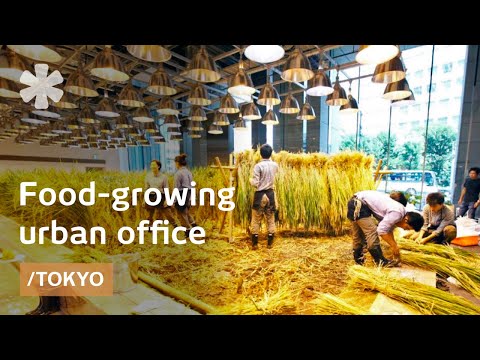
Imagine an apartment building where lettuce, herbs, tomatoes, or mushrooms are grown in shared indoor spaces. This idea combines housing with controlled-environment agriculture: plants may be raised under LED lights, often using hydroponics rather than soil. Supporters argue that food grown close to residents can be fresher, available throughout the year, and less dependent on long supply chains. It could also turn an ordinary building into a social space where neighbors learn practical skills and share part of their food supply.
However, growing food indoors is not automatically sustainable or affordable. Lighting, ventilation, cooling, water systems, maintenance, and trained staff can be expensive. Indoor farms are especially suited to quick-growing leafy greens and herbs, not necessarily to staple crops such as wheat or rice. There are social questions too: who does the work, who pays when equipment fails, and how should a limited harvest be shared fairly? The discussion is really about whether convenience, community, and resilience can outweigh the financial and environmental costs.
However, growing food indoors is not automatically sustainable or affordable. Lighting, ventilation, cooling, water systems, maintenance, and trained staff can be expensive. Indoor farms are especially suited to quick-growing leafy greens and herbs, not necessarily to staple crops such as wheat or rice. There are social questions too: who does the work, who pays when equipment fails, and how should a limited harvest be shared fairly? The discussion is really about whether convenience, community, and resilience can outweigh the financial and environmental costs.
Useful vocabulary
Approx. CEFR · Topic relevance
controlled-environment agriculture
Food production in a carefully managed indoor or enclosed setting.
Controlled-environment agriculture could make local food available even during a harsh winter.
hydroponics
/ˌhaɪdrəˈpɑnɪks/A method of growing plants in nutrient-rich water instead of soil.
Hydroponics seems practical for herbs, but I would miss the feeling of gardening in soil.
staple crop
A basic food that people eat regularly, such as rice, wheat, or potatoes.
An indoor farm may grow salad greens well, but it is unlikely to replace staple crops.
resource-intensive
Requiring large amounts of energy, water, money, or materials.
Indoor farming can be resource-intensive if the building relies on fossil-fuel electricity.
harvest allocation
The way a crop or food supply is divided among people.
A fair harvest allocation might give every household a small weekly share.
self-sufficiency
/ˌsɛlf səˈfɪʃənsi/The ability to meet needs without depending greatly on outside support.
A building farm would improve self-sufficiency, but it could not provide every kind of food.
Useful expressions
The key trade-off is between ___ and ___.
Use this to identify two competing benefits or priorities.
The key trade-off is between ultra-fresh produce and high electricity use.
That depends largely on whether ___.
Use this to show that the answer changes according to a condition.
That depends largely on whether residents see gardening as a benefit or an obligation.
It may be viable on a small scale, but ___ is another matter.
Use this to distinguish a pilot project from wider adoption.
It may be viable on a small scale, but feeding an entire high-rise is another matter.
We should distinguish between ___ and ___.
Use this to challenge an oversimplified comparison.
We should distinguish between reducing transport distance and reducing total emissions.
A fair system would need to account for ___.
Use this to introduce criteria for an equitable decision.
A fair system would need to account for financial contributions, time, and household size.
Sources & further reading
Question list
- Ice breaking
- Main topic
- Free talk
| Q1. | What is your favorite season and why? |
|---|---|
| Q2. | If you could give your younger self one piece of advice, what would it be? |
| Q3. | If you had the ability to ease someone’s burden secretly, who would you help? |
| Q4. | How do you find strength in vulnerable moments? |
| Q5. | What’s a habit that’s had a positive impact on your life? |
| Q6. | How do you find meaning in your life? |
| Q7. | How do you respond when someone's expectations overwhelm you? |
| Q8. | How has social media influenced your worldview? |
| Q1. | What food would you grow inside your building? |
|---|---|
| Q2. | Would fresh food nearby change how you shop? |
| Q3. | Could residents share the work of growing it? |
| Q4. | What might be difficult about farming indoors? |
| Q5. | Would you pay more to live in such a building? |
| Q6. | How should neighbors divide the harvest? |
| Q7. | Could this idea work in a crowded city? |
| Q8. | Would you prefer a rooftop garden or an indoor farm? |
| Q1. | How do you think we can promote greater innovation and entrepreneurship? |
|---|---|
| Q2. | Does your name have any special meaning? |
| Q3. | Would you rather be able to take to animals or speak many foreign languages? |
| Q4. | Why do we often avoid doing the thing we know will help us most? |
| Q5. | Would you rather have the ability to teleport but only to places you've never been or only to places you've been at least 100 times? |
| Q6. | Some people think mistakes are essential for growth. Can you share one of your most valuable mistakes? |
| Q7. | What helps you manage your emotional bandwidth? |
| Q8. | Imagine education was optional worldwide. How would society change? |
Rules


Please be kind and respectful.
Note: You can be banned for violating any of these rules
No flirting! Don't ask for other people's social network, number etc. if he/she refuses to give them.
Note: You can be banned for violating any of these rules
Give others an equal opportunity to speak.
Note: You can be banned for violating any of these rules
Avoid Smoking / Drinking while you are talking.
Note: You can be banned for violating any of these rules
Turning your camera on is mandatory.
Note: You can be banned for violating any of these rules
Ready to join the conversation?
Book your spot and bring your perspective to the discussion.