Would You Live Somewhere With Two Months of Darkness?
Learn topic-related expressions and join the speaking club to practice them!


Marhaban everyone! my name is Bilel and I'm from Tunisia . I have a bachelor's degree in English (International Relations). I have worked as a translator, International Business Developer and a director in a teaching center. After COVID, I started my carrier as a part-time English teacher in Tunis, the capital city of Tunisia. I'm an ambitious person, and never give up my dream of working for the Ministry of Foreign Affairs of Tunisia, and why not be an ambassador someday!?
I'm thrilled to see you all in the Langclub sessions.

Topic guide Optional
A quick way to understand the topic and find useful language. Read as much or as little as you like.
1-minute overview
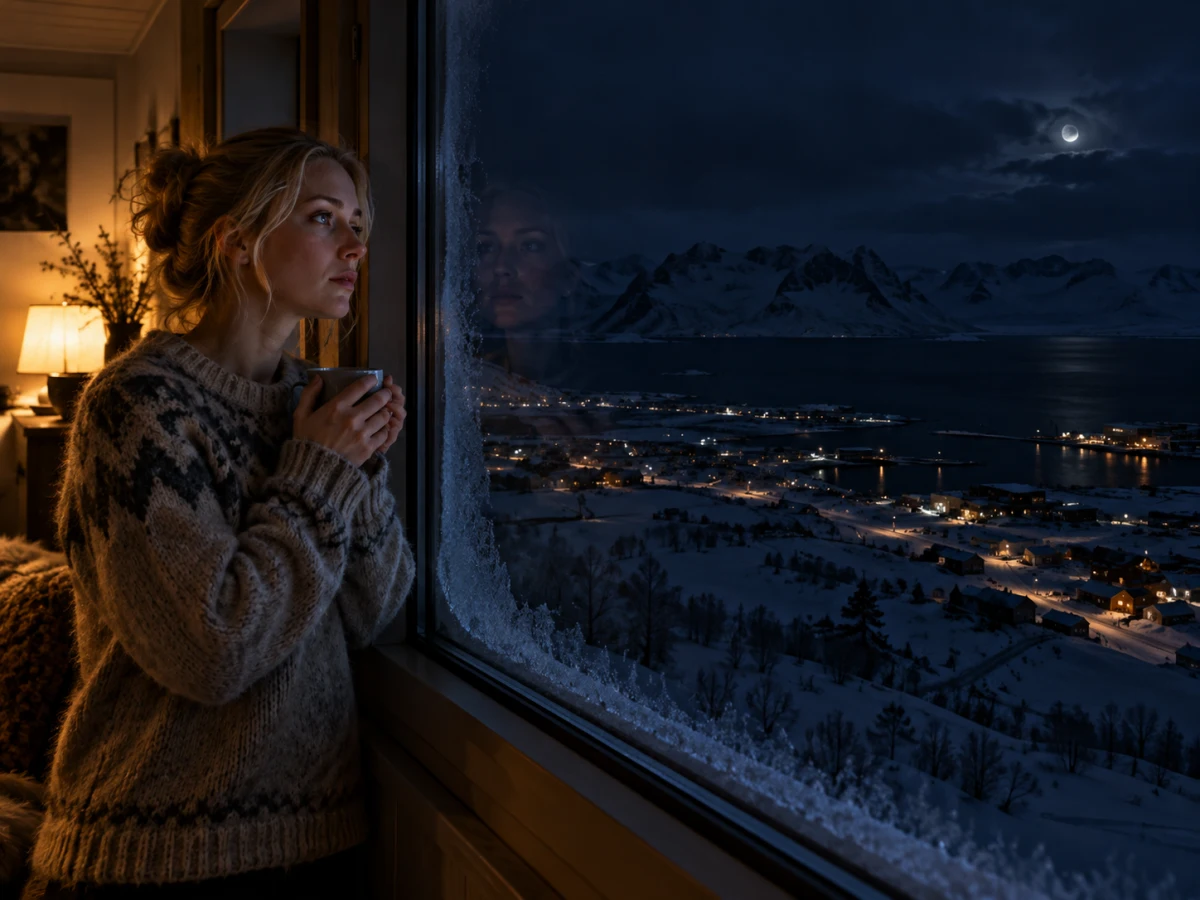
In the Arctic, the polar night is the period when the sun stays below the horizon all day. In Tromsø, Norway, at nearly 70° North, this lasts from about late November to mid-January, roughly seven weeks. Farther north, such as Longyearbyen on Svalbard, the sun is absent for even longer, and the darkest stretch runs from mid-November to late January. It is rarely pitch black. Around midday, a blue twilight often appears, and snow reflects light from the moon, stars and the aurora.
People who live there often describe a life that carries on as normal. Schools and shops stay open, and communities lean on candles, outdoor lights, cafés, sport and social rituals. Norwegians also talk about koselig, a cosy mindset that treats winter as something to embrace.
The tensions are real, though. Reduced daylight can disrupt sleep, energy and mood, and some people experience seasonal depression. Others find the contrast with endless summer light just as disorienting. The question is whether beauty, community and routine can make darkness a rewarding rhythm or only a test of endurance.
Useful vocabulary
Approx. CEFR · Topic relevance
polar night
A period in the Arctic or Antarctic when the sun does not rise above the horizon for at least twenty-four hours, often for weeks.
During the polar night, many residents rely on lamps, routines and social events to keep up their energy.
circadian rhythm
The body's roughly twenty-four-hour internal clock, which regulates sleep, alertness and hormones and is strongly influenced by light.
Without sunrise to guide my circadian rhythm, I would need a very strict bedtime.
twilight
/ˈtwaɪlaɪt/The soft, dim light in the sky when the sun is just below the horizon.
The blue twilight at midday might make the darkness feel less absolute than I expected.
seasonal affective disorder
A form of depression that recurs at a particular time of year, most often in winter when daylight is limited.
Seasonal affective disorder is a good reason to try the place for one winter before committing.
light therapy
A treatment that uses exposure to bright artificial light, often from a special lamp, to improve mood and regulate sleep.
Many people in northern regions use light therapy at breakfast to feel more alert.
resilience
/rɪˈzɪljəns/The ability to cope with hardship and recover well from difficult conditions.
Communities in the Arctic show impressive resilience, but I wonder whether it is learned or simply chosen.
Useful expressions
That depends largely on whether
Qualifying a claim by naming the key condition that determines the answer.
That depends largely on whether you have friends nearby, because isolation would make the darkness harder.
It's one thing to..., but quite another to...
Contrasting an appealing idea with the harder reality.
It's one thing to visit for a week, but quite another to live there for the whole winter.
To some extent, but I'd argue that
Partly agreeing before politely challenging a point.
To some extent, but I'd argue that beautiful scenery cannot replace actual daylight.
On balance, I'd lean toward
Giving a considered preference after weighing both sides.
On balance, I'd lean toward a dark winter because summer sunlight would wreck my sleep.
That's a trade-off worth weighing
Presenting a choice in which gains and losses are tied together.
Cheap housing and quiet nature are a trade-off worth weighing against months without sun.
Sources & further reading
Question list
- Ice breaking
- Main topic
- Free talk
| Q1. | What’s a tradition or habit that’s been passed down through generations in your family? |
|---|---|
| Q2. | What would you do if you were given the chance to live in a virtual reality world, but you could never return to the real world? |
| Q3. | How do you communicate your feelings without overexplaining? |
| Q4. | What’s a surprising way you’ve seen resilience show up in your life? |
| Q5. | How often do you cook? |
| Q6. | What’s an ordinary object in your home that carries extraordinary meaning for you? |
| Q7. | How do you maintain focus in a world full of distractions? |
| Q8. | Would you rather go camping or stay in a hotel? |
| Q1. | What would you miss most during two months without sunlight? |
|---|---|
| Q2. | Would you try living there for just one winter? |
| Q3. | How might you keep a regular daily routine in constant darkness? |
| Q4. | Which indoor activities would help you enjoy the long nights? |
| Q5. | Would beautiful snowy scenery make the darkness easier to accept? |
| Q6. | What would you ask someone who already lives there? |
| Q7. | Would you prefer a dark winter or a summer without darkness? |
| Q8. | What would make this place feel like home to you? |
| Q1. | How do you formulate opinions on the spot? |
|---|---|
| Q2. | If someone approaches you and said "I love you". What would you say? |
| Q3. | How much money do you think you need to leave happily ever after? |
| Q4. | What role will technology play in our future? |
| Q5. | How worried are you about the future? |
| Q6. | How do you think the concept of "global citizenship" has evolved over time, and what role does it play in today's interconnected world? |
| Q7. | How do you show support to people you care about? |
| Q8. | Is it important to have fun in life? |
Rules


Please be kind and respectful.
Note: You can be banned for violating any of these rules
No flirting! Don't ask for other people's social network, number etc. if he/she refuses to give them.
Note: You can be banned for violating any of these rules
Give others an equal opportunity to speak.
Note: You can be banned for violating any of these rules
Avoid Smoking / Drinking while you are talking.
Note: You can be banned for violating any of these rules
Turning your camera on is mandatory.
Note: You can be banned for violating any of these rules
Ready to join the conversation?
Book your spot and bring your perspective to the discussion.