Would You Spend Your Savings on a Trip to Space?
Learn topic-related expressions and join the speaking club to practice them!


Hello everyone! I'm Geetanjali Tiwari from New Delhi, India. I recently graduated in English and Political Science, and I'm looking forward to beginning my master's journey.I'm an avid reader, a curious learner, and someone who loves meaningful conversations. I believe that language is more than just words, it's a way to connect with people, exchange ideas, and understand different cultures.
That's what I enjoy most about LangClub, and I'm excited to create a welcoming space where we can all learn from one another.

Topic guide Optional
A quick way to understand the topic and find useful language. Read as much or as little as you like.
1-minute overview
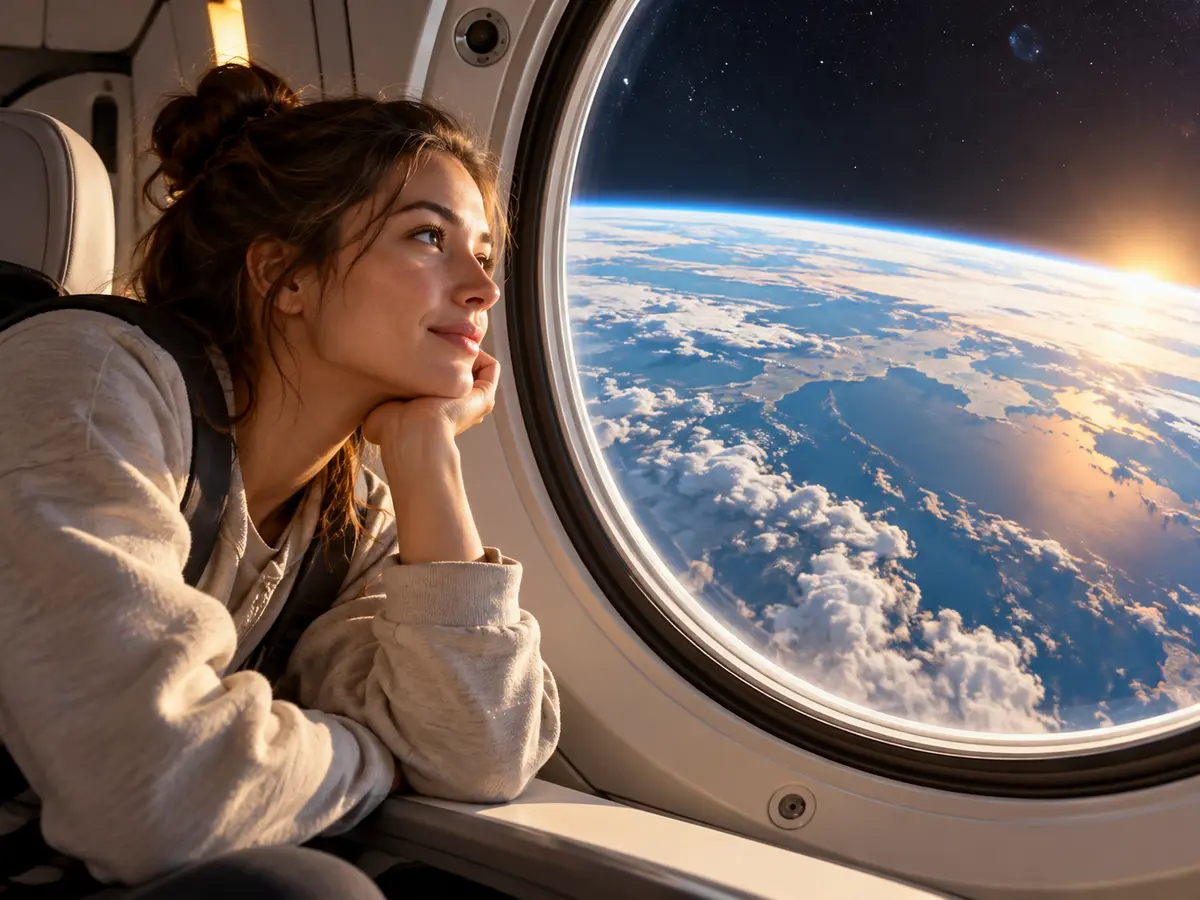
Space tourism turns a childhood dream into a personal financial decision. Suborbital flights can offer a few minutes of weightlessness and a view of Earth’s curve; orbital journeys promise far more time, complexity, and cost. Although only a small number of people have flown privately, commercial human spaceflight is no longer purely theoretical. In the United States, participants must receive risk information and give informed consent; the government does not certify these vehicles as safe for passengers.
That makes the question bigger than whether the view would be beautiful. Spending savings on a flight involves opportunity cost: the same money might buy security, education, family time, or support for urgent problems on Earth. Yet people also spend on rare experiences because they can change perspective, strengthen relationships, and create memories.
A useful discussion can separate personal freedom from social fairness. Is an expensive adventure justified if the buyer accepts the risk? Or should extreme luxury be judged partly by its environmental effects, public image, and possible contribution to future science and transport?
Useful vocabulary
Approx. CEFR · Topic relevance
suborbital
/ˌsʌbˈɔrbɪtəl/Reaching space without travelling fast enough to remain in orbit around Earth.
A suborbital trip might be enough for me because I mainly want to experience weightlessness.
informed consent
Agreement to take part after receiving clear information about known risks.
Informed consent matters most when customers cannot fully predict the dangers involved.
opportunity cost
The value of what you give up when choosing one option over another.
The opportunity cost of a space ticket could be a home deposit or several years of travel on Earth.
risk tolerance
The amount of danger or uncertainty a person is willing to accept.
My risk tolerance is low, so even a spectacular view would not persuade me to fly.
weightlessness
/ˈweɪtləsnəs/The feeling of having little or no apparent weight during free fall.
I would be curious about weightlessness, but I might find it physically uncomfortable.
externality
/ˌɛkstərˈnælɪti/A cost or benefit that affects people who did not choose or pay for an activity.
Some people see emissions from luxury travel as an externality that society should consider.
Useful expressions
The central trade-off is between ... and ...
Use this to identify two competing priorities.
The central trade-off is between an unforgettable experience and long-term financial security.
That argument depends on the assumption that ...
Use this to examine an idea’s hidden basis.
That argument depends on the assumption that private space travel will eventually benefit the wider public.
We should distinguish between ... and ...
Use this to separate related ideas that may be confused.
We should distinguish between accepting personal risk and creating risks for other people.
The question is not simply whether ..., but whether ...
Use this to make a discussion more nuanced.
The question is not simply whether someone can afford the trip, but whether the spending is socially responsible.
From a broader perspective, ...
Use this to introduce wider social, ethical, or environmental effects.
From a broader perspective, space tourism may shape how society thinks about inequality and exploration.
Sources & further reading
Question list
- Ice breaking
- Main topic
- Free talk
| Q1. | What tiny decision changed your day for the better recently? |
|---|---|
| Q2. | What would your life look like if it were turned into a sitcom? |
| Q3. | How do you describe the feeling of truly belonging? |
| Q4. | Have you ever felt inspired by witnessing generosity in others? |
| Q5. | Are you good at small talk and making conversation? |
| Q6. | What’s an underrated quality you appreciate in others? |
| Q7. | What advice would you give to someone facing the same struggles you’ve overcome? |
| Q8. | Who is your professional/personal role model or inspiration? |
| Q1. | Would you like to see Earth from space? |
|---|---|
| Q2. | What would make a space trip worth the cost? |
| Q3. | How much risk would you accept for the experience? |
| Q4. | Should space tourism be only for wealthy people? |
| Q5. | Could money spent on space trips help people on Earth instead? |
| Q6. | Would you rather visit space or explore the deep ocean? |
| Q7. | Who would you take with you? |
| Q8. | What would you hope to learn from the trip? |
| Q1. | If you could live in any type of home, what would it be and why? |
|---|---|
| Q2. | Which of your vices or bad habits would be the hardest to give up? |
| Q3. | How does your daily routine change with each season? |
| Q4. | Historical events are often retold differently across regions. How do you approach this difference? |
| Q5. | What makes you feel comfortable opening up to someone? |
| Q6. | If someone approaches you and said "I love you". What would you say? |
| Q7. | What role do you think international cooperation and collaboration should play in the future of space exploration and the quest to colonize other planets? |
| Q8. | How do you stay motivated and focused on your goals, even when faced with obstacles or setbacks? |
Rules


Please be kind and respectful.
Note: You can be banned for violating any of these rules
No flirting! Don't ask for other people's social network, number etc. if he/she refuses to give them.
Note: You can be banned for violating any of these rules
Give others an equal opportunity to speak.
Note: You can be banned for violating any of these rules
Avoid Smoking / Drinking while you are talking.
Note: You can be banned for violating any of these rules
Turning your camera on is mandatory.
Note: You can be banned for violating any of these rules
Ready to join the conversation?
Book your spot and bring your perspective to the discussion.