
Would You Stay in a Hotel Run Entirely by Robots?
Learn topic-related expressions and join the speaking club to practice them!


Hi! I’m Evelyn. I’m from Taiwan and currently doing a Master’s degree in occupational therapy in Australia. I love meeting new people and chatting with people from different backgrounds. I’m really looking forward to having great conversations with you!

Topic guide Optional
A quick way to understand the topic and find useful language. Read as much or as little as you like.
1-minute overview
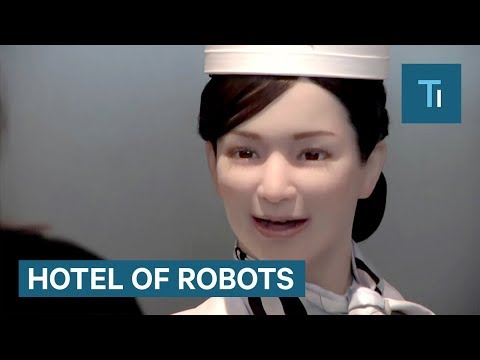
Robot-run hotels are no longer only science fiction. Japan’s Henn na Hotel, often described as the first hotel with working robot staff, uses robots, kiosks, and other automated systems for tasks such as greeting guests and check-in. Across hospitality, robots are also being used or tested for deliveries, cleaning, luggage handling, and simple information services. Yet even highly automated hotels often keep people available when a situation becomes unusual or difficult.
The appeal is clear: a machine may offer fast, multilingual, contactless service at any hour, without a queue at reception. The tensions are equally clear. A delayed flight, a lost passport, an accessibility need, or a cleaning problem may require judgment, empathy, and flexibility rather than a standard response. There are also questions about privacy, reliability, jobs, and price. A robot hotel could feel efficient and exciting to one guest, but impersonal or even unsettling to another. The key issue may not be whether robots replace people, but which parts of hospitality should remain human.
The appeal is clear: a machine may offer fast, multilingual, contactless service at any hour, without a queue at reception. The tensions are equally clear. A delayed flight, a lost passport, an accessibility need, or a cleaning problem may require judgment, empathy, and flexibility rather than a standard response. There are also questions about privacy, reliability, jobs, and price. A robot hotel could feel efficient and exciting to one guest, but impersonal or even unsettling to another. The key issue may not be whether robots replace people, but which parts of hospitality should remain human.
Useful vocabulary
Approx. CEFR · Topic relevance
self-service kiosk
A machine that lets customers complete tasks, such as check-in or payment, by themselves.
A self-service kiosk is convenient unless the guest has a problem the system cannot recognize.
service recovery
The actions a business takes to solve a problem and rebuild a customer’s trust.
Good service recovery would mean offering a new room immediately after a robot gives out the wrong key.
escalation
/ˌeskəˈleɪʃən/The process of passing a problem to someone with more authority or expertise.
The hotel needs a clear escalation process for medical emergencies and serious complaints.
autonomous
/ɔˈtɑnəməs/Able to operate or make limited decisions without direct human control.
An autonomous cleaning robot might work at night when corridors are empty.
uncanny valley
The uncomfortable feeling some people have when a robot looks or behaves almost, but not quite, human.
A human-like receptionist could create an uncanny valley effect for some guests.
data privacy
The protection and responsible use of people’s personal information.
Guests may worry about data privacy if the hotel uses facial recognition at check-in.
Useful expressions
The real test is not whether it can work, but whether it can work reliably under pressure.
Use this to shift the discussion from novelty to reliability.
The real test is not whether it can work, but whether it can work reliably under pressure during a late-night emergency.
That assumes that the system can handle the exceptions, not just the routine cases.
Use this to challenge an overly optimistic claim about automation.
That assumes that the system can handle the exceptions, not just the routine cases.
We should distinguish between efficiency and genuine hospitality.
Use this to compare fast service with emotional or personal service.
We should distinguish between efficiency and genuine hospitality when we evaluate robot hotels.
The trade-off may be convenience at the expense of human reassurance.
Use this to describe a possible cost of a technological benefit.
The trade-off may be convenience at the expense of human reassurance for anxious travelers.
I can see the appeal, provided that there is an easy human fallback.
Use this to give qualified support rather than complete agreement.
I can see the appeal, provided that there is an easy human fallback when something goes wrong.
Sources & further reading
Question list
- Ice breaking
- Main topic
- Free talk
| Q1. | Would you rather have a stressful, high paying job or a relaxed, low paying job? |
|---|---|
| Q2. | What type of stories do you never get tired of hearing? |
| Q3. | Have you ever been on TV/the radio? |
| Q4. | What are the characteristics of a toxic person? Have you met any? |
| Q5. | What helps you learn vocabulary? |
| Q6. | Have you ever found yourself lost in a creative project for hours? |
| Q7. | What is considered cheating in a relationship? |
| Q8. | If you could reshape the way you spend your evenings, what would change? |
| Q1. | What would you ask a robot hotel worker first? |
|---|---|
| Q2. | Could robots make checking in faster? |
| Q3. | When would you need a human hotel employee? |
| Q4. | Would a robot room cleaner make you uncomfortable? |
| Q5. | How should the hotel handle a robot mistake? |
| Q6. | Would this hotel feel exciting or lonely? |
| Q7. | Should robot hotels cost less than ordinary hotels? |
| Q8. | Would you stay for one night to try it? |
| Q1. | What are some examples of unconventional or non-traditional paths to success that you find inspiring or intriguing? |
|---|---|
| Q2. | How do you think technology is changing the way we live? |
| Q3. | What small detail can change your whole day? |
| Q4. | Which initiative would best improve mental health care accessibility? |
| Q5. | Do you follow international sporting events such as the Olympics or World Cup? |
| Q6. | How do you remain fair when judging situations? |
| Q7. | What are funerals like in your culture or country? |
| Q8. | Why do people find comfort in familiar routines? |
Rules


Please be kind and respectful.
Note: You can be banned for violating any of these rules
No flirting! Don't ask for other people's social network, number etc. if he/she refuses to give them.
Note: You can be banned for violating any of these rules
Give others an equal opportunity to speak.
Note: You can be banned for violating any of these rules
Avoid Smoking / Drinking while you are talking.
Note: You can be banned for violating any of these rules
Turning your camera on is mandatory.
Note: You can be banned for violating any of these rules
Ready to join the conversation?
Book your spot and bring your perspective to the discussion.