Would You Want to Know How Your Pet Really Feels About You?
Learn topic-related expressions and join the speaking club to practice them!


Hi! I’m Daniel, a Systems Engineer and B2B SaaS Sales leader. After years of public speaking, coaching, and stage performance, I believe selling is just clear communication. I’m here in LangClub to sharpen my English for global business, connect with people, and learn about different cultures—which is already happening! Outside of work, I'm a meditation instructor. Let’s make every conversation great!

Topic guide Optional
A quick way to understand the topic and find useful language. Read as much or as little as you like.
1-minute overview
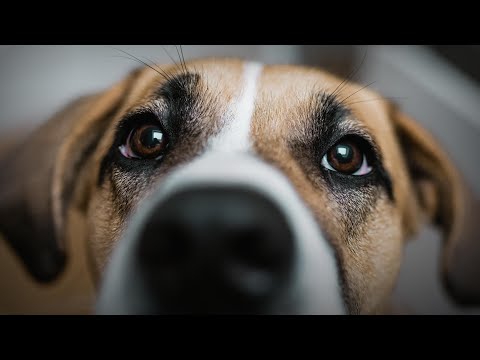
Imagine a collar or app that claimed to translate your pet's barks, meows and body language into plain sentences. In 2026, products such as the PettiChat collar made exactly that promise, reportedly using large AI models trained on pet sounds. Critics respond that the output sounds suspiciously human and may be entertaining invention rather than real interpretation.
Scientists already read animal emotion indirectly. They study posture, facial expression, vocal tone, stress hormones and approach or avoidance behavior. Dogs and cats clearly form attachments, yet researchers warn against assuming that animals share human thoughts, or that a confident-sounding claim of accuracy proves anything.
The tensions are rich. Would honest feedback improve care, or merely reveal that a cat values food over affection? Could translation make us more attentive, or tempt us to project our own wishes onto animals? And if a pet wanted solitude, would we respect it? Perhaps understanding pets would make ownership more ethical, but also more complicated.
Useful vocabulary
Approx. CEFR · Topic relevance
anthropomorphism
/ˌænθrəpoʊˈmɔrfɪzəm/The habit of attributing human thoughts, feelings or motives to animals or objects.
Calling my cat's stare a judgment of my life choices is probably anthropomorphism.
body language
Posture, movement and expression that communicate feeling without words.
A dog's stiff tail and turned head may be clearer than any bark.
attachment
A strong emotional bond, especially one that gives security.
Researchers study whether a dog's attachment to its owner resembles a child's bond with a parent.
projection
Unconsciously assigning your own feelings or wishes to someone else.
When I say my rabbit is lonely, it may be projection of my own mood.
stress signal
A behavior showing an animal is anxious or uncomfortable, such as lip-licking or hiding.
Yawning at the vet can be a stress signal, not tiredness.
autonomy
/ɔːˈtɑnəmi/The ability to make one's own choices and control one's own life.
Respecting a pet's autonomy might mean letting it leave a cuddle whenever it wants.
Useful expressions
That may be reading too much into it
Challenging an interpretation that goes beyond the evidence.
A purr is pleasant, but that may be reading too much into it if we call it a declaration of love.
To some extent, but it depends on
Qualifying a claim by naming the factor that changes it.
Pets show comfort to some extent, but it depends on the animal's history and personality.
Whereas
Contrasting two cases or viewpoints clearly.
Dogs often seek attention, whereas many cats communicate through distance.
What is the evidence for that?
Politely asking someone to support a claim.
You say the translator is accurate, but what is the evidence for that?
On the flip side
Introducing an opposing consequence or advantage.
Knowing a pet's feelings could improve care; on the flip side, it might create guilt.
Question list
- Ice breaking
- Main topic
- Free talk
| Q1. | What’s an unconventional way you like to relax? |
|---|---|
| Q2. | Think about a place that makes you feel instantly creative—what’s it like? |
| Q3. | If you could have any celebrity narrate your life, who would you choose and why? |
| Q4. | What’s something that always reminds you how far you’ve come? |
| Q5. | If you had more free time, what would you do? |
| Q6. | Is there a place you’ve visited that felt like stepping into another world? |
| Q7. | How do you choose which relationships to invest in deeply? |
| Q8. | What’s the most daring or adventurous thing you've ever done, and what did you learn from the experience? |
| Q1. | How can you tell when an animal feels comfortable with someone? |
|---|---|
| Q2. | What would you ask your pet if it could answer? |
| Q3. | Would an honest answer about you make you nervous? |
| Q4. | Could knowing an animal's feelings change how you care for it? |
| Q5. | Would you want to hear a pet's complaints every day? |
| Q6. | What human habits might seem strange to a pet? |
| Q7. | How could people respect an animal's wish to be alone? |
| Q8. | Would understanding pets make owning them easier or more complicated? |
| Q1. | What’s the most thought-provoking art you've ever seen? |
|---|---|
| Q2. | Is social media doing more harm than good? |
| Q3. | What are some of the most interesting or unique culinary techniques or ingredients you've encountered in your exploration of different cuisines? |
| Q4. | Street food is a cultural treasure. Is there a dish from your region that deserves more international attention? |
| Q5. | Parenting styles differ widely. What values would you prioritize in raising the next generation? |
| Q6. | When was the last time you exercised, and what did you do? |
| Q7. | How do you define self-worth? |
| Q8. | Who makes you feel calm during stressful moments? |
Rules


Please be kind and respectful.
Note: You can be banned for violating any of these rules
No flirting! Don't ask for other people's social network, number etc. if he/she refuses to give them.
Note: You can be banned for violating any of these rules
Give others an equal opportunity to speak.
Note: You can be banned for violating any of these rules
Avoid Smoking / Drinking while you are talking.
Note: You can be banned for violating any of these rules
Turning your camera on is mandatory.
Note: You can be banned for violating any of these rules
Ready to join the conversation?
Book your spot and bring your perspective to the discussion.